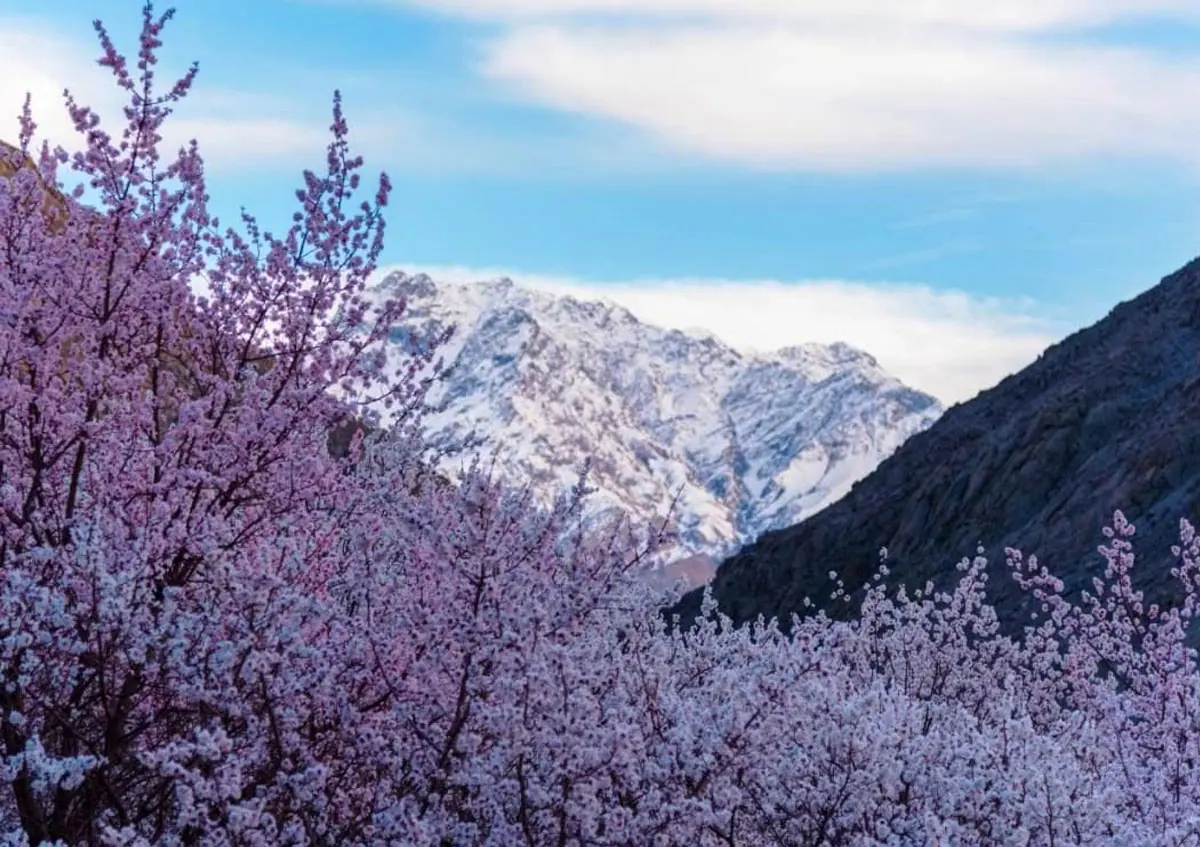
The best photography in northern Pakistan comes from matching the subject to the season: blossom in spring, high meadows and glaciers in summer, gold poplars in October, and clear dark skies in the colder months. The Karakoram rewards patience more than gear. We run every trip from Skardu, and this guide covers where we stand, when we go, and what we pack.
Where to photograph northern Pakistan
Most photographers base themselves in two places: the Hunza valley for villages, forts and 7,000 m walls beside the road, and Skardu for lakes, deserts, Deosai and the approach to the big Baltoro peaks. Chitral and the Kalash valleys add culture and festivals. Each suits a different kind of picture.
Hunza is the easiest introduction. Peaks such as Rakaposhi stand above the valley floor, and a day of driving passes terraced fields, old forts and turquoise water. Our overview in the Hunza valley travel guide explains how to split your days between Karimabad, Gulmit and Passu.
Skardu is wilder and more varied. Within a short drive you can photograph cold desert dunes, Shangrila-style lakes, Satpara and the plateau of Deosai. It is also the gateway to every major trek, so a photographer can extend a few days of valley shooting into a Baltoro journey. See the Skardu travel guide for the layout of the town and valley.
Best seasons for landscape photography
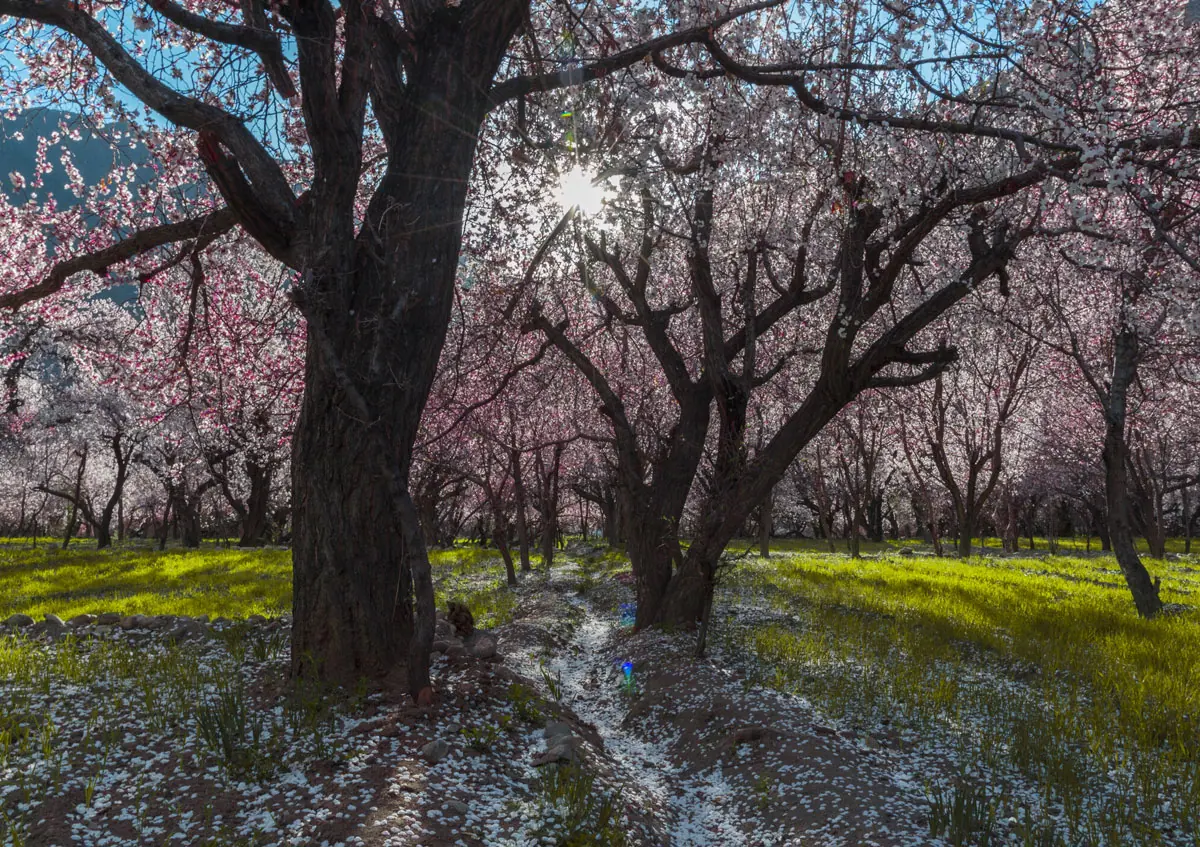
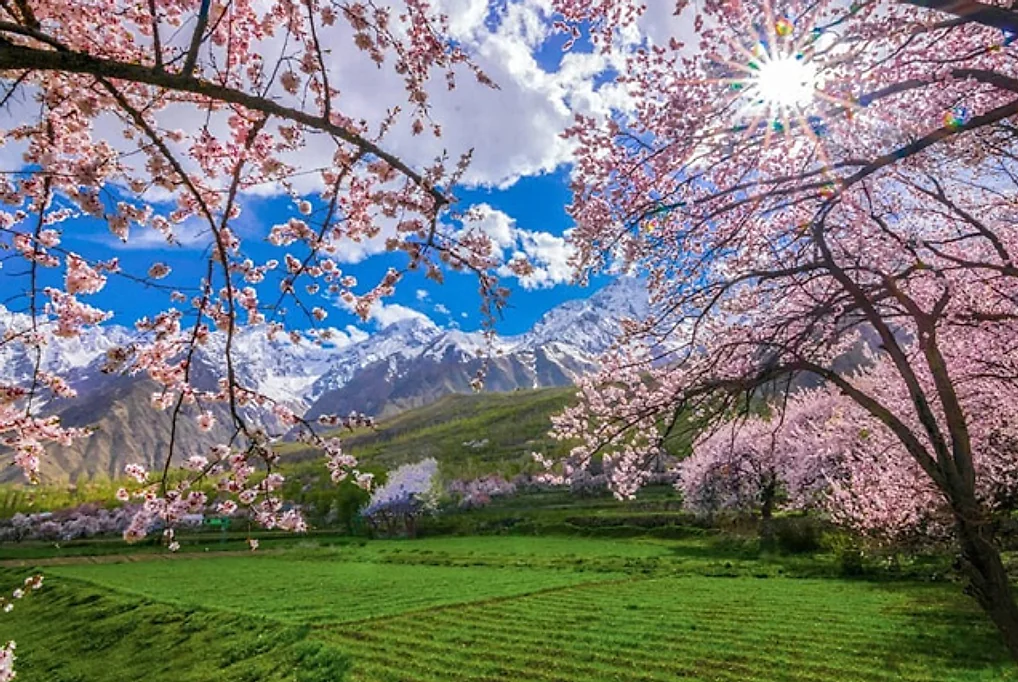
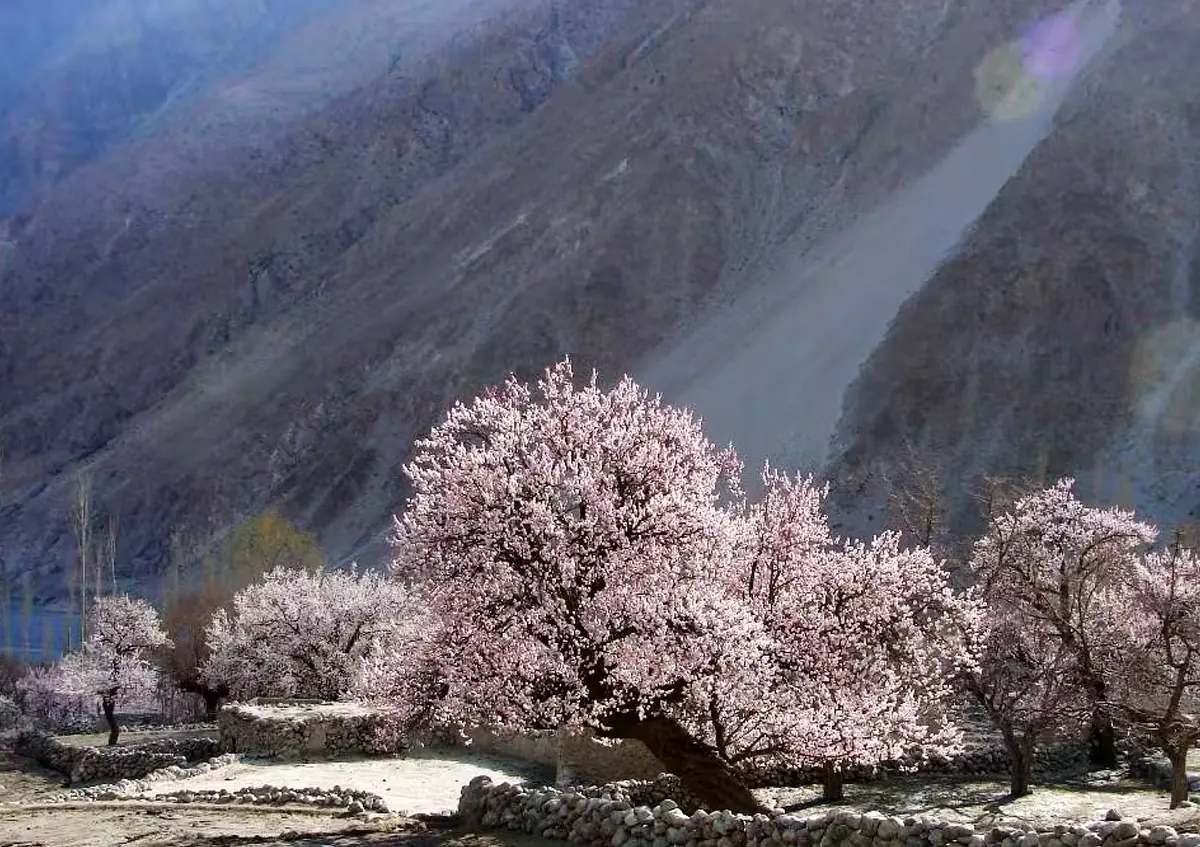
Spring suits blossom and fresh green terraces, summer suits high mountains and wildflowers, autumn gives the famous golden colour in October, and the clearest night skies come when air is cold and dry. Each season has a trade-off in haze, road access and crowds, so choose by subject first.
| Subject | Where | Best light | Season |
|---|---|---|---|
| Spring blossom | Hunza villages, Skardu valley | Soft early morning | Spring, usually April |
| Summer high mountains | Deosai, Fairy Meadows, Baltoro | Sunrise and late afternoon | June to August |
| Autumn colour | Karimabad, Gulmit, Passu, Skardu | Low side light, golden hour | October |
| Night sky | Hunza, Deosai, trek camps | Moonless nights, after dark | Clear, cold, dry weather |
Blossom timing moves from year to year with the winter, so a fixed calendar date is a gamble. We watch the valleys and confirm timing close to departure. Our Hunza apricot blossom tour and Skardu blossom tour are built around that window, with spare days where the weather can slide the schedule.
Autumn is the season most people picture. Poplars, apricots and willows turn within the same fortnight, usually in October, and the air tends to be clearer than in summer. The Hunza autumn colours tour is timed for it. For a wider look at weather by month, read our guide to the best time to visit Hunza and Skardu.
Signature shots and where to get them
The classic frames are Rakaposhi and the Passu Cones from Hunza, Attabad Lake, Baltit and Altit forts, Deosai wildflowers, Nanga Parbat from Fairy Meadows, the night sky over the peaks, and Baltoro and K2 on a trek. Here is how we approach each one.
- Rakaposhi (7,788 m) from the Hunza valley: its great height above the valley is the whole picture. Shoot at dawn from the Karimabad side, and use a longer lens to compress the wall against the fields in front.
- Passu Cones: the jagged spires are best in low light, either with the river and the Karakoram Highway in the foreground or from a viewpoint that shows the whole ridge. Early light is usually cleaner than midday.
- Attabad Lake: the colour of the water is the subject. A polarising filter deepens the turquoise, and a boat or a bridge gives scale. Late morning often shows the colour best.
- Baltit and Altit forts: shoot the forts from the lanes below at golden hour, then go inside for textured wood, stone and window light. Check access with your guide.
- Deosai wildflowers: a high plateau where flowers bloom in summer. Get low, shoot into the soft light, and watch for changing weather.
- Nanga Parbat from Fairy Meadows: the Killer Mountain rises above the pine meadow. Dawn is the prize, when clouds often clear for a short window. Our Fairy Meadows short trek gives you a night on the meadow.
- Night skies: Milky Way pictures need a moonless night, a sturdy tripod and a wide fast lens. Peaks make a strong silhouette, and campsites far from lights are ideal.
- Baltoro and K2: on a trek the light is changing every hour. Plan for glacier textures, Trango, Cathedral and the final reveal of K2 (8,611 m), and carry a lens for each distance.
None of these is a guarantee. Cloud, haze and snow decide the final picture, and the Karakoram often rewards the photographer who waits an extra hour. Our photography tour builds that slack into the itinerary so you are not rushing to the next stop.
Gear and practical tips
Carry one wide zoom, one mid-range telephoto, a sturdy tripod, spare batteries and a dust-safe way to change lenses. Cold drains batteries fast, altitude tires you, and trail dust finds sensors. A small kit you can carry all day beats a heavy bag you leave in the jeep.
- Lenses: a wide-angle zoom for valleys and night skies, and a telephoto for compressing ridges and picking out detail. A single versatile lens is fine for a lighter trek.
- Batteries: keep spares inside your jacket against your body, and swap them when the camera warms. Carry a power bank for cold nights in tents and guesthouses.
- Cold: use lens hoods and gloves with a thin liner so you can still work the dials. Let a cold camera warm slowly in a bag before opening it in a warm room, to limit condensation.
- Dust and wind: change lenses inside a bag or jacket, carry a blower and microfibre cloths, and avoid exposing the sensor on the trail or on the Karakoram Highway.
- Altitude: you will move slowly above 3,000 m and think less clearly. Build in rest days, drink steadily, and read our altitude acclimatisation guide before a higher trek.
- Backups: copy images to a second card or drive every evening. Electricity can be patchy outside the main towns.
Drones need care. Rules on flying them in Pakistan, and near sensitive areas, change, so check with us before you pack one. Do not assume a drone is allowed, and never fly over villages, military sites or people without clear permission.
Photographing people respectfully
Always ask before you photograph someone, smile, and accept a no without argument. This matters most in the Kalash valleys, where festivals are community events and not performances, and in conservative villages where women may not wish to be photographed. A guide who speaks the language makes asking easy.
- Ask first, every time, and show the picture if the person wants to see it. If they decline, put the camera down and move on.
- Be especially careful with women, children and elders, and with private scenes such as homes, prayer and graveyards.
- At Kalash festivals, follow the guidance of your guide and local hosts about where to stand and what not to film. Read our Chitral travel guide for context on the valleys.
- Do not pay for pictures as a default, but a shared cup of tea and a conversation often leads to better portraits than a quick snap.
- Offer to send a print or a copy where you can. Keep a note of names and places, and do not post a person's picture in a way that misrepresents them.
Respect makes better pictures. People relax when they are asked, and the portrait of a farmer in an orchard, or a porter at a river crossing, is almost always stronger when it is shared and not taken.
Plan this with us
Our Pakistan photography tour is from $1,800 per person, with the price falling as the group grows. The seasonal tours start at $950 for the Skardu blossom tour, $1,150 for the Hunza apricot blossom tour and $1,250 for the Hunza autumn colours tour. We are Balti-run, hold DTS licence No. 008, and plan each day around the light, not the clock.