There is no single best month for the north, because each season offers something different. Late September to mid October gives colour and the clearest skies, June to early September opens the high country, and late March to mid April brings blossom. Winter is quiet and demanding. This guide walks through the year the way we plan it from Skardu.
When is the best time to visit Hunza and Skardu?
For most travellers the best time to visit Hunza and Skardu is late September to mid October for autumn colour and clear skies, or June to early September for Deosai, high passes and long daylight. Late March to mid April suits blossom. Winter is possible but quiet, and road and flight delays are likelier.
The table below summarises the year. Treat every window as typical rather than fixed: the weather in the Karakoram, Hindu Kush and western Himalaya does not follow a calendar, and a late winter or an early cold snap can move things by a week or two in either direction.
| Month | What it's like | Best for | Notes |
|---|---|---|---|
| Jan–Feb | Cold, snow on the ground, very quiet | Stillness, snow photography | Passes closed; delays likely |
| Mar–Apr | Thaw, then blossom from late March | Apricot and cherry blossom | Lower valleys first, higher later |
| May | Green, warming, fewer crowds | Easy valley touring | Khunjerab usually reopening |
| Jun–Aug | Warm days, long light, high passes open | Deosai, treks, Khunjerab | Busiest months; book early |
| Sep | Settled, clearing air | Treks, quieter touring | Colour begins at altitude |
| Oct | Crisp, golden, very clear | Autumn colour, photography | Cold nights; peak demand |
| Nov–Dec | Bare trees, cold, first heavy snow | Quiet travel, low prices | Some guesthouses close |
If you are weighing the two valleys against each other first, our comparison of the two valleys sets out how they differ in character. If your main goal is a trek rather than valley touring, the dedicated season guide covers high-altitude routes in more depth.
Spring: blossom season
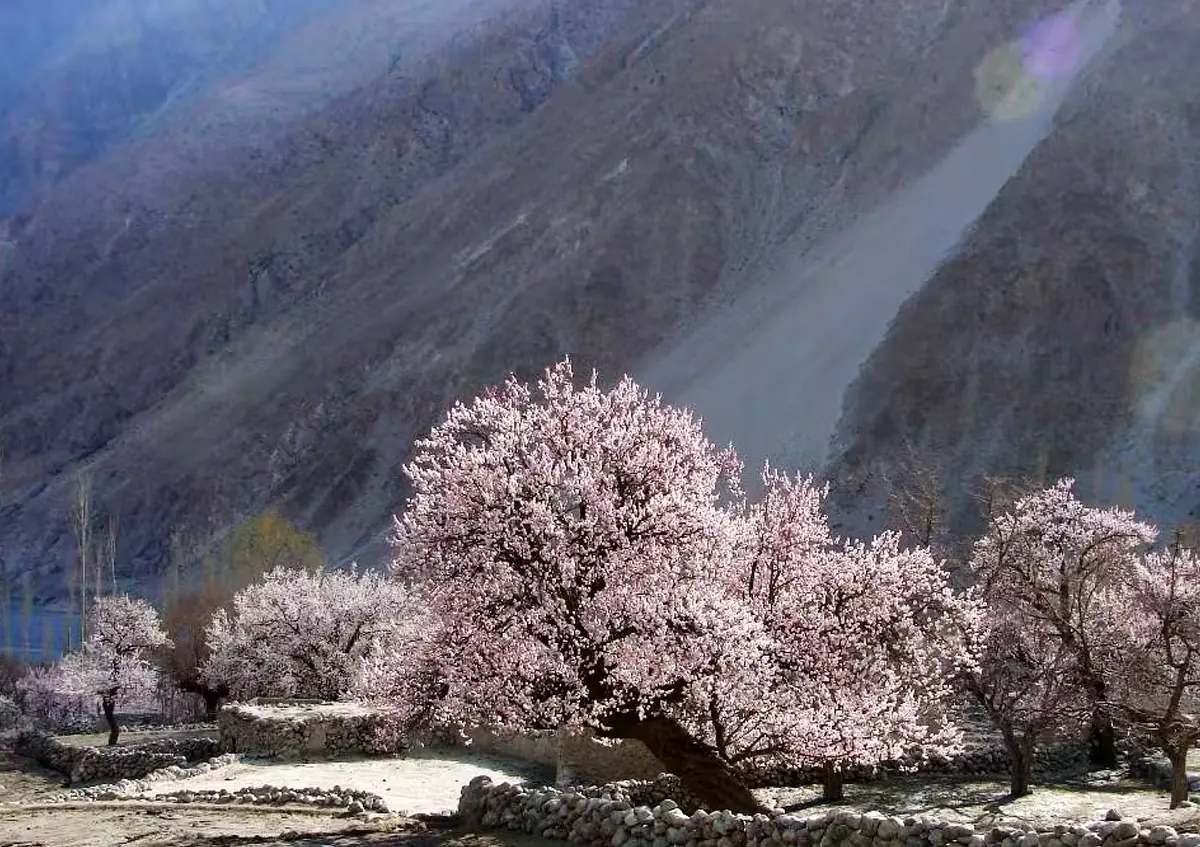
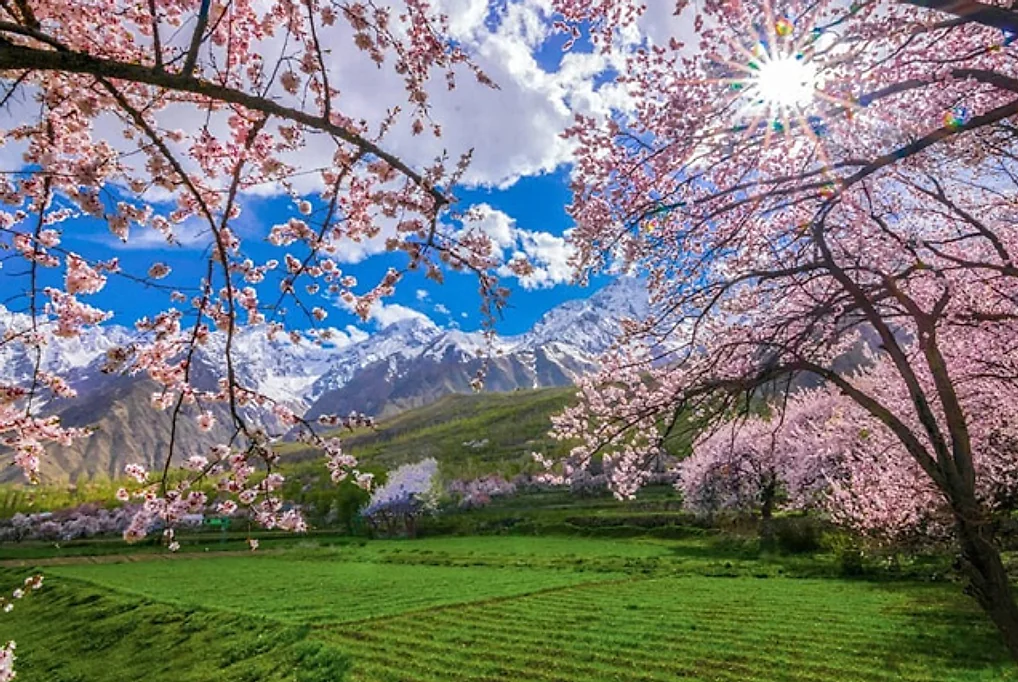
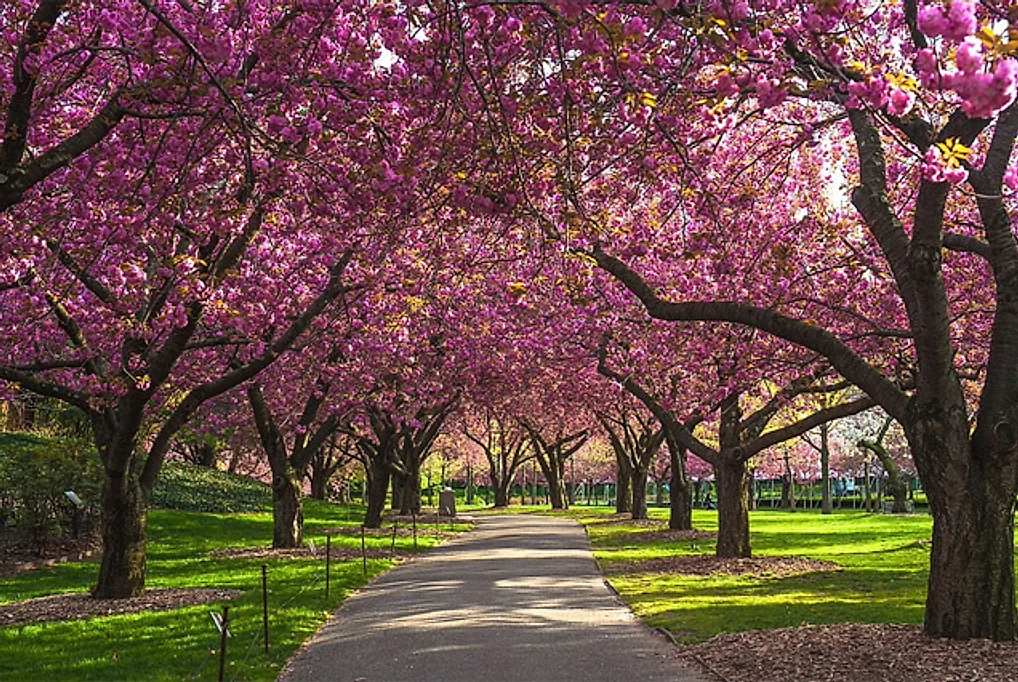
Blossom season usually runs from late March to mid April, starting in the lower, warmer parts of each valley and moving up with elevation. Apricot and cherry blossom turn Hunza and Skardu pink and white against snow peaks. Timing shifts with each year's winter, so we confirm dates close to departure rather than promising one.
Spring is the gentlest season to travel. Temperatures are mild in the valleys, the fields are being ploughed and planted, and the surrounding peaks are still heavily snow-covered, which makes for striking photographs. Because the bloom travels uphill, a trip that spans several villages can catch it at different stages, from full flower low down to buds in the upper settlements.
The trade-off is uncertainty. A warm spell can bring the bloom forward and a cold one can hold it back, and a few days of rain can strip petals quickly. If the blossom is the whole point of your trip, give yourself flexibility and ask us how the season is developing before you book flights. We run dedicated blossom departures for both valleys.
Prices are per person at our larger group tiers and fall as the group grows; ask us for a quote for your exact party size.
Summer: trekking and high passes
June to early September is the high season: roads and passes are open, days are long, and the Khunjerab Pass, Deosai plateau and trekking routes are all accessible. Lower valleys can be hot, so the high country is the draw. Expect more visitors, fuller hotels and the occasional landslide delay on the Karakoram Highway.
Deosai is the clearest example of why summer matters. The plateau sits at around 4,000 metres and is snowbound for much of the year, so it is generally reachable only in the warmer months, usually from early summer into early autumn. Wildflowers and grazing marmots are a feature of the season, and the weather can still turn cold and wet at that altitude even in July.
Summer is also when the long treks to base camps are practical, and it is when the Khunjerab Pass, the border crossing with China on the Karakoram Highway, is normally open to visitors. Opening and closing dates for the pass depend on the authorities and the weather, so we treat any date as provisional until confirmed. In July and August the monsoon is weak in the far north compared with the rest of Pakistan, but heavy rain further south can still disrupt the road to and from Islamabad.
Our Skardu valley and Deosai tour is built around these summer conditions, covering the town, the lakes and the plateau from our base in Skardu.
Autumn: colour and clear skies
Late September to October brings golden poplars, apricot and willow leaves, crisp air and some of the clearest views of the year. Days are cool and settled, nights get cold, and the light suits photography. Colour usually peaks earlier at higher elevation and later lower down, so exact timing varies year to year.
Many people who visit more than once name autumn as their favourite. The summer haze has gone, the peaks stand out sharply, and the villages feel busy with harvest, drying fruit and preparing for winter. It is also a good season for walking at moderate altitude without the heat of July.
It is popular, so the best hotels fill earlier than at other times, and the nights are properly cold in the upper valleys. Pack layers even if the afternoons feel warm. We run a dedicated autumn departure for Hunza, timed for the colour rather than for a fixed calendar date.
Winter in the north
Winter, roughly November to February, is cold, quiet and snow-covered, with few other travellers and bare orchards. Higher passes close, roads can freeze or be blocked, and some guesthouses shut. It suits photographers and travellers who value stillness and accept delays; it is a poor choice for a tight schedule or for anyone wanting trekking.
In winter the valleys are rewarding in a different way. The air is very clear on settled days, the peaks are fully white, and you see local life without the seasonal crowds. Hotels that stay open are often quieter and sometimes cheaper, though heating quality varies, so we choose properties carefully.
The costs are practical ones. Daylight is short, mornings can be bitterly cold, and the Karakoram Highway and side roads can be slowed by snow, ice or rockfall. Khunjerab is normally closed to visitors. If you want a winter trip, we recommend extra buffer days and a flexible mindset rather than a packed itinerary.
Getting there by season (flights vs road)
Skardu is reached by flight from Islamabad or by the long road via the Karakoram Highway, and the flights are weather-dependent: cloud can cancel them at any time of year. Hunza is a long drive from Islamabad on the KKH. We build buffer days into itineraries and plan road fallbacks, so one delay doesn't end the trip.
The flight to Skardu is short and scenic when it runs, but it depends on clear conditions in the mountains. Cancellations and reschedules happen in every season, and in winter and during unsettled spells they are more frequent. Never plan an international departure on the day after a mountain flight. Keep a spare day at the end of the trip.
The road is dependable in character but long. The Karakoram Highway between Islamabad and the Hunza region takes most of a day or more, depending on stops and conditions, and the road onward to Skardu is another substantial stretch. Landslides and rockfall are most likely in the rainy or melt periods, and snow affects the higher sections in winter. We prefer to drive in daylight and to break the journey sensibly, which also makes the trip more interesting.
Our practical advice is to treat the journey as part of the trip rather than an obstacle to it. Flying one way and driving the other is a popular compromise, and we can arrange either direction. The right choice depends on your dates, tolerance for risk and the time you have.
Which month suits which trip?
Match the month to your priority. Choose late March to mid April for blossom, June to early September for Deosai and the high country, and late September to October for colour. Choose winter only if quiet and snow appeal more than reliability. May and early September are good quieter shoulder options for general touring.
- Photography and colour: October, with late September as a close second.
- Blossom: late March to mid April, flexible on dates.
- Deosai, high passes and long daylight: June to early September.
- Fewer crowds and mild weather: May and September.
- Quiet and snow: December to February, with spare days built in.
If you are covering both valleys in one trip, summer and autumn are the most forgiving seasons because roads are generally open and daylight is long. Our combined itinerary links Hunza and Skardu without a repeated route.
Plan this with us
We are a Skardu-based, Balti-run operator, licensed with the Department of Tourist Services (DTS No. 008), and we run every trip ourselves with no middlemen. Tell us your dates and what matters most, whether blossom, colour, Deosai or quiet, and we will tell you honestly what to expect and how much flexibility to build in.