Explore Lahore
Request a quoteExplore
A 13-day cultural tour from Islamabad to Karachi through Pakistan's World Heritage sites: Taxila, Rohtas, Lahore, Mohenjo-daro and Makli, with the Indus Valley Civilisation as the thread. Run in the cool season, with long road days and open ruins.
Per person in USD, full-board — the larger your group, the lower the per-person cost. We confirm your exact all-in figure in writing before any deposit.
| Group size | Per person |
|---|---|
| 7–10 people | $1,600 |
| 4–6 people | $1,900 |
| 1–3 people | $2,300 |
Excludes international flights, Pakistan visa, insurance, personal equipment and tips.
Guaranteed small-group dates for the 2027 season. Prefer your own dates? Every trip can also run privately inside its season window.
| 18 Jan 2027 → 30 Jan 2027 | Book this date |
|---|---|
| 12 Feb 2027 → 24 Feb 2027 | Book this date |
| 8 Mar 2027 → 20 Mar 2027 | Book this date |
| 8 Nov 2027 → 20 Nov 2027 | Book this date |
| 5 Dec 2027 → 17 Dec 2027 | Book this date |
The UNESCO Heritage & Indus Valley Tour is an easy 13-day cultural journey from Islamabad to Karachi, following the Indus plains from north to south. It is built around the World Heritage sites of Pakistan's lowlands: Taxila, Rohtas Fort, Lahore Fort and the Shalimar Gardens, Mohenjo-daro and the Makli necropolis at Thatta. It is a hotel-based trip with a private vehicle, a local guide and one domestic flight, for travellers who like ruins, tombs and museums more than trekking.
The sites span more than four thousand years. Mohenjo-daro, in Sindh, belongs to the Indus Valley Civilisation, a city of fired-brick streets and drains that flourished from about 2500 BCE and was abandoned by about 1900 BCE. Taxila, near Islamabad, holds Buddhist monasteries and stupas of the Gandhara period, in use from about the 3rd century BCE to the 5th century CE. Rohtas Fort was begun by Sher Shah Suri in the 1540s, the Mughals left their mark on Lahore, and the tombs of Makli were raised by the Samma, Arghun, Tarkhan and Mughal-era rulers of Sindh between the 14th and 18th centuries.
Because the Indus Valley story is the thread, we add two sites that are not on the World Heritage List. Harappa, in the Punjab, is the other great city of the Indus Valley Civilisation, and the half-day at Kot Diji, near Khairpur, shows the earlier, pre-Harappan settlement and a Talpur-era fort. Harappa and several other places we visit, among them the Walled City of Lahore, are on Pakistan's tentative list but not formally inscribed, and we say so when we are there. The inscribed sites in this itinerary are Taxila, Rohtas Fort, Lahore Fort and the Shalimar Gardens (one inscription), Mohenjo-daro, and the Historical Monuments at Makli, Thatta.
This is a trip with long road days and a lot of standing in the sun. The drive from Islamabad to Lahore via Rohtas takes most of a day, Harappa is a day trip of about three hours each way, and the run through Sindh from Larkana to Thatta covers several days of ordinary highway. Many of the sites are ruins in open ground, with little shade, few facilities and uneven brick or stone underfoot; a hat, sunscreen and good walking shoes matter more than fitness. Mosques and shrines require modest dress and, in places, covered heads and shoes left at the door, and we explain what is expected before each one. We stay in hotels throughout: comfortable in Islamabad, Lahore and Karachi, plainer in Sukkur, Larkana and Thatta.
The trip runs from October to March because the plains are too hot for sightseeing in the open for the rest of the year. From April to September daytime temperatures in Punjab and Sindh are often above 40 degrees, and at ruins like Mohenjo-daro and Makli there is almost nowhere to shelter. The monsoon (July to September) also brings flooding to parts of Sindh. The cool season is the sensible time, though it is not uniform from end to end.
13 stages over 13 days, starting and finishing in Islamabad and Karachi. Routes can be shortened, extended or privately dated.
We meet you at Islamabad airport and transfer to the hotel. After rest, a short orientation drive through the city: the Faisal Mosque at the foot of the Margalla Hills, and the view over the capital from Daman-e-Koh if the haze allows. The first night is a quiet one, as the next two days involve a lot of driving.
A short drive of about 35 km to Taxila, a World Heritage site since 1980 and a centre of Buddhist learning in the Gandhara period. We visit the Dharmarajika stupa complex, the monastery at Jaulian on its hill, and the ruined streets of the Sirkap city, a Greek-style grid of the 2nd century BCE, with time in the Taxila Museum for the Gandhara sculpture and coins. The sites are open, with stone steps and little shade. We return to Islamabad for the night.
A long day on the road. We drive south-east on the Grand Trunk Road, about two and a half hours, to Rohtas Fort near Jhelum, begun by Sher Shah Suri about 1541 to hold the Gakhar tribes and a World Heritage site since 1997. Its massive sandstone walls run for about four kilometres, with 12 gates; we walk the main gate, the Shah Chandwali gate and the parapet, and the climb between them is moderate. We then continue to Lahore, another three hours or so, and arrive in the evening.
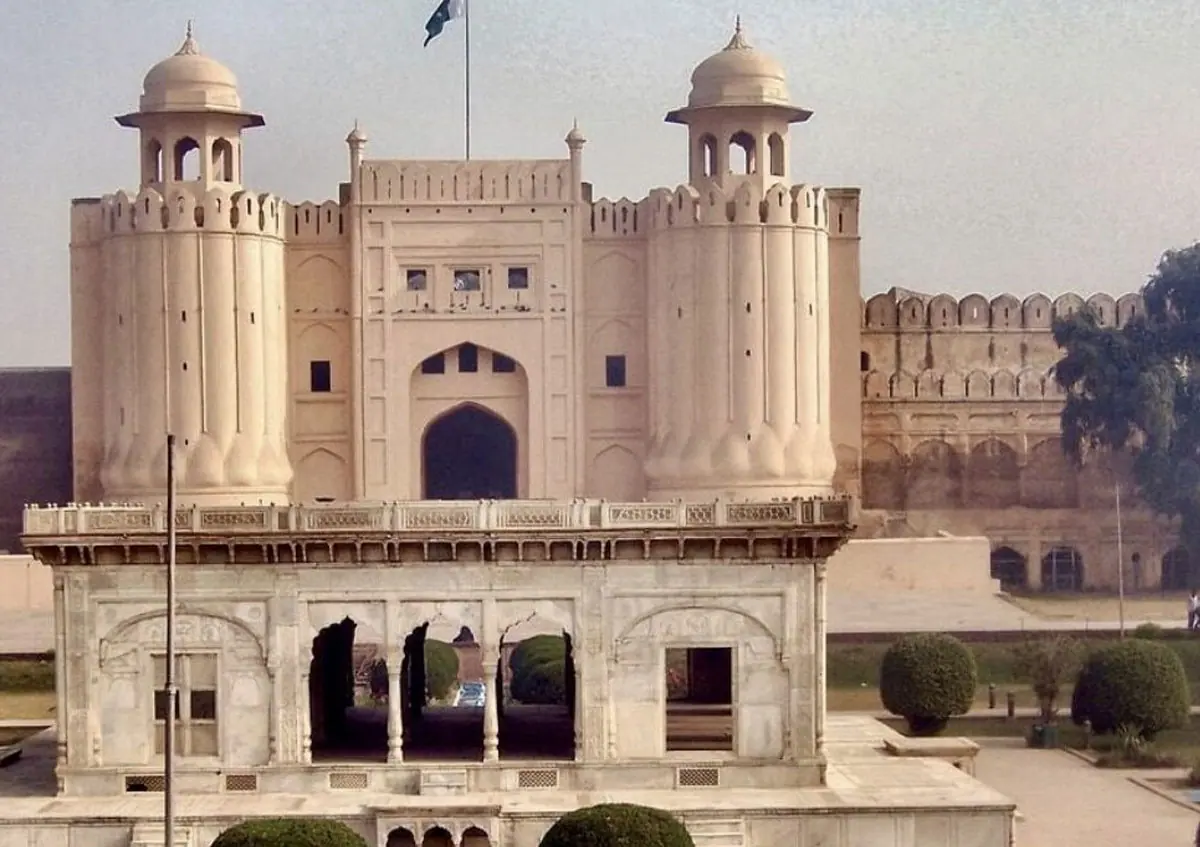
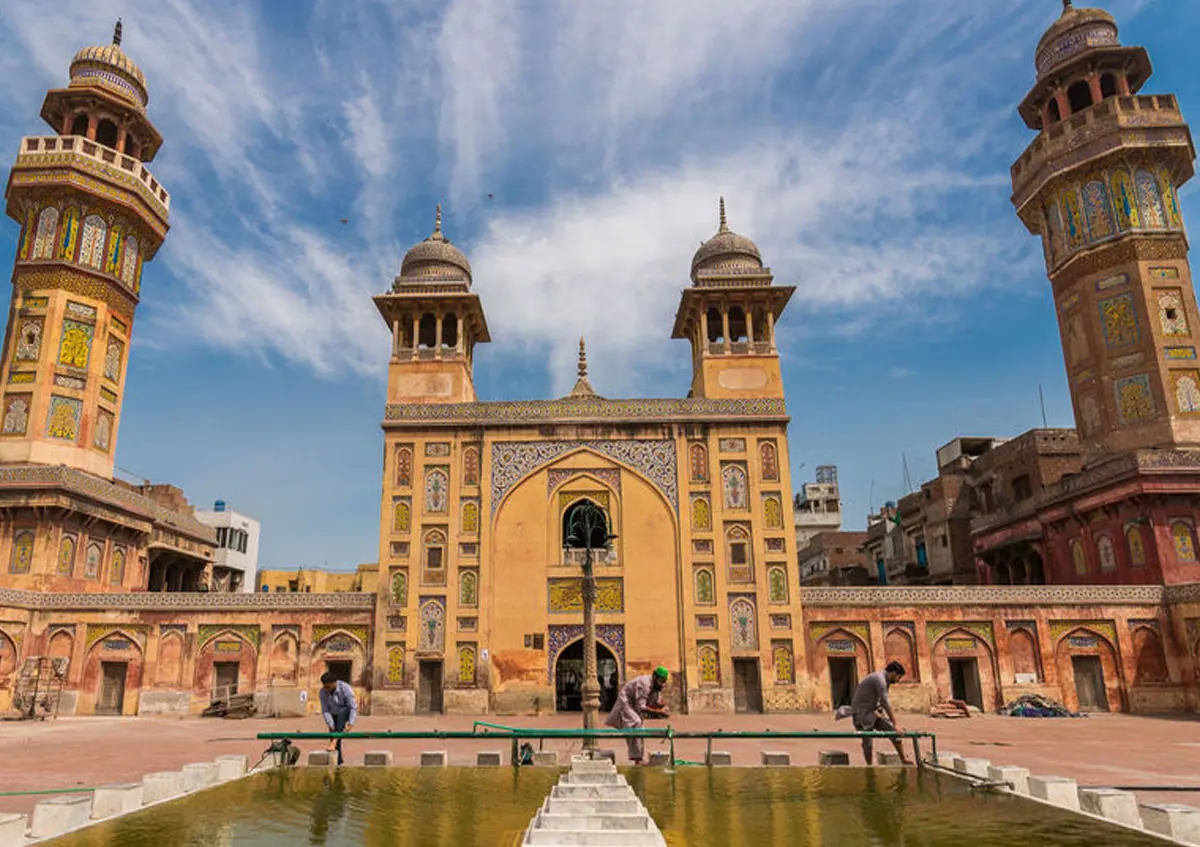
A full day in the old city. We start at Lahore Fort, inscribed in 1981, with the Mughal palaces and pavilions of Akbar, Jahangir and Shah Jahan, among them the Sheesh Mahal with its mirrored ceiling. Beside it stands the Badshahi Mosque, built for Aurangzeb in the 1670s and one of the largest in the world; it is not part of the World Heritage inscription, but is a highlight of the day. We then walk the lanes of the Walled City to the Wazir Khan Mosque, with its tile work, and eat in the old bazaar. Mosques require modest dress.
The Shalimar Gardens, laid out for Shah Jahan about 1641, are the other half of the Lahore inscription: three terraces, water channels and fountains, and a place to walk slowly. In the afternoon we visit the Lahore Museum, which holds one of the larger collections of Gandhara sculpture and Indus Valley objects in the country, and, if time permits, the tomb of the emperor Jahangir at Shahdara, which is on the tentative list. A slower day, with the evening free in the Food Street area of the old city.
A drive of about three hours south-west to Harappa, near Sahiwal, and back. Harappa was a major city of the Indus Valley Civilisation, occupied from about 2600 BCE; much of its fired brick was taken in the 19th century as ballast for the Lahore to Multan railway, so the mounds are low and the evidence is mostly in the small site museum and the excavated lanes and cemetery. It is not yet a World Heritage site. It sets up Mohenjo-daro, which we see later in the trip, and the day is long and quiet. We return to Lahore for the night.
A flight south to Sukkur, usually about an hour and a half. The domestic timetable changes and we confirm it at booking; if no suitable flight runs, we fly via Karachi or add a night and drive. From the airport we visit the Lansdowne Bridge over the Indus at Sukkur, then drive on to Kot Diji, about an hour south, for the Talpur-era fort of the 1790s and the nearby mound, where the early, pre-Harappan culture of the Indus was first described. Neither is a World Heritage site. We sleep in Sukkur or Khairpur in a simple hotel.
A drive of about two to three hours to Mohenjo-daro, near Larkana. The ruins, inscribed in 1980, show a planned city of straight streets, wells and covered drains, with the raised citadel and the Great Bath on its mound; a Buddhist stupa of a much later date stands on top. We spend most of the day here, with a guide and a break in the site museum. The site is large and open, with little shade, and some areas are closed to protect the brickwork. We spend the night in Larkana.
A long drive south. We stop at Sehwan Sharif, about three hours from Larkana, home to the shrine of the 13th-century Sufi Lal Shahbaz Qalandar, which we visit as respectful guests and not as sightseers; dress is modest and shoes are left outside. Conditions at the shrine and on the road are checked before we go, and we adjust if necessary. We continue to Hyderabad, about two hours further, where we sleep. This is the longest drive of the trip, roughly 350 km.
A short morning in Hyderabad, with the Pacco Qilo fort and the nearby Kalhora and Talpur tombs, then about two hours south-east to Thatta, once the capital of Sindh. In the late afternoon, when the light is better, we reach the Makli necropolis, one of the largest burial grounds in the world, with hundreds of thousands of graves stretching across a ridge for several kilometres. We spend the night in Thatta.
These are the standard inclusions for our tour programmes and are confirmed in writing on your final itinerary before any payment is taken.
Taxila, Rohtas Fort, Lahore Fort and the Shalimar Gardens, Mohenjo-daro, and the Historical Monuments at Makli, Thatta are on the World Heritage List. Harappa, Kot Diji, the Badshahi Mosque, the Walled City of Lahore and Jahangir's tomb are important but are not inscribed; some are on Pakistan's tentative list. We say which is which at each site.
The plains of Punjab and Sindh are very hot from April to September, often above 40 degrees, and most of these sites are open ruins with little shade. The monsoon also brings flooding to parts of Sindh. October and March can still be warm, and December and January bring fog in the Punjab, which can delay drives and flights, so November and February are usually the easiest months.
A good deal. The longest days are Day 3 (Islamabad to Lahore via Rohtas Fort), Day 6 (Harappa and back, about three hours each way) and Day 9 (Larkana to Hyderabad, roughly 350 km). There is one domestic flight, from Lahore to Sukkur. The domestic timetable changes, so we confirm it at booking and, if no suitable flight runs, offer a flight via Karachi or an extra night on the road.
Ordinary fitness is enough. The walking is on flat or gently sloping ground, but you are on your feet for several hours at a time, often in the sun, on uneven brick or stone. Rohtas Fort has some climbing on its ramparts, which you can skip. Good walking shoes, a hat and sunscreen matter more than fitness.
Modest clothing: shoulders and knees covered, and a head covering for women at mosques and shrines, with shoes taken off at the door. Photography is not welcome in some places and at some times, such as inside shrines, and your guide will tell you where to ask first. Some religious sites, notably the Sufi shrine at Sehwan, are working places of worship and we visit them quietly.
Our routes are on the main highways and we use hotels and a local guide throughout. Conditions in the interior of Sindh can change, so we check them before departure and during the trip and may adjust the plan, for example by shortening a stop or changing the order of days. We do not run the trip if the situation does not allow it.
This is graded easy. Most days are easy and hotel-based, with a private vehicle and only short, optional walks rather than trekking; the main demands are the long mountain drives and the thin air on any high pass or plateau. If you tell us a little about yourself we will give you an honest answer.
The season is October – March. We can also arrange a private departure on your own dates within it.
2–14. Smaller and private groups are available and often cost less per head than you would expect — ask us for a quote on your own dates.
The headline is the per-person rate for a standard group of 7–10; smaller groups pay a little more per head because fixed costs — guide, permits, liaison officer and transport — are shared across fewer people. Prices are full-board, and we confirm your exact all-in total in writing before any deposit.
No reviews yet — be the first to review the unesco heritage & indus valley tour.
Practical guides to help you prepare for the unesco heritage & indus valley tour: