Skardu Blossom Tour
Request a quoteExplore
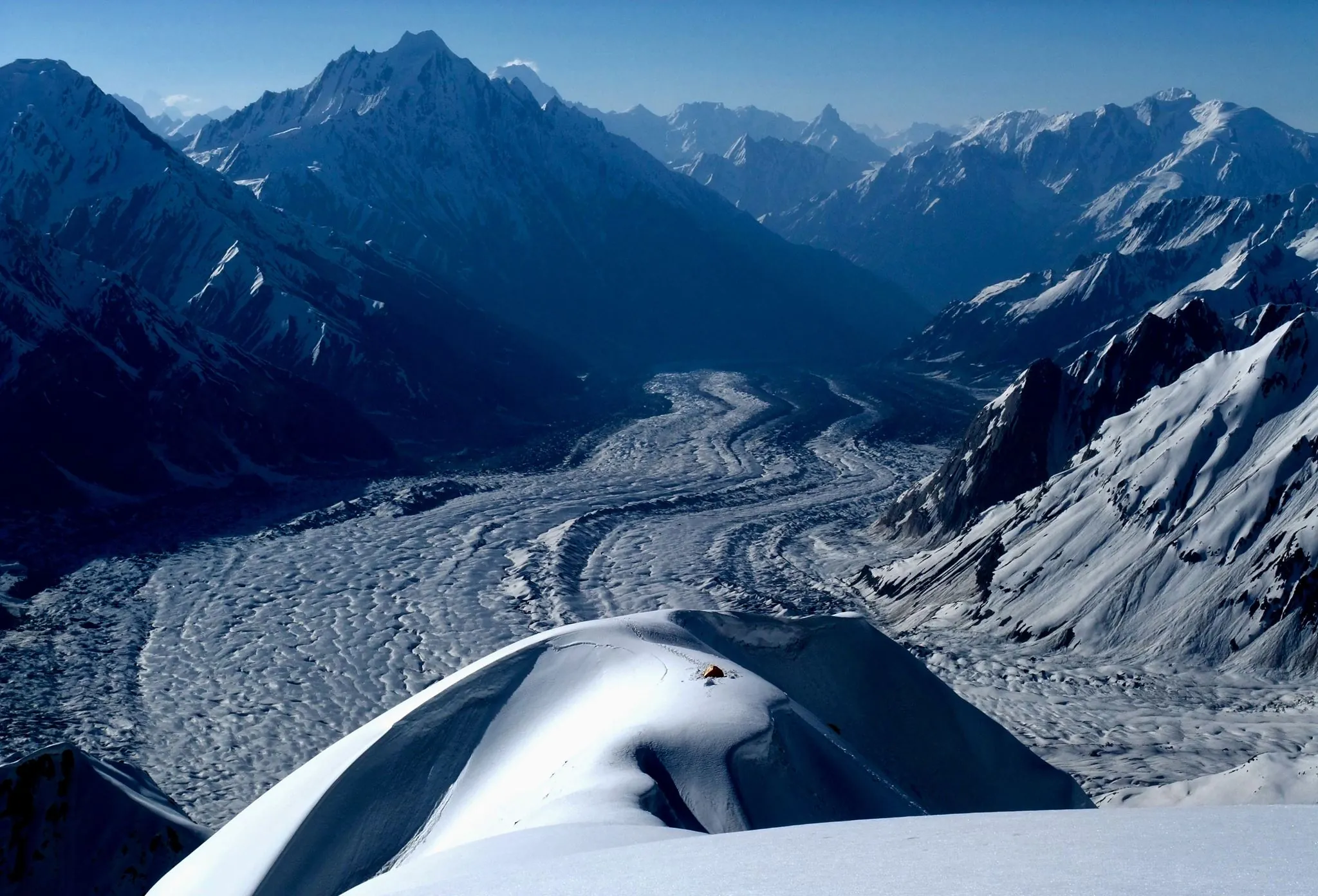
A twelve-day cultural journey by road and air linking Hunza and Skardu, from the forts of Karimabad and the Khunjerab Pass to the Kachura lakes and Shigar Fort.
Per person in USD, full-board — the larger your group, the lower the per-person cost. We confirm your exact all-in figure in writing before any deposit.
| Group size | Per person |
|---|---|
| 7–10 people | $1,650 |
| 4–6 people | $1,950 |
| 1–3 people | $2,400 |
Excludes international flights, Pakistan visa, insurance, personal equipment and tips.
Guaranteed small-group dates for the 2027 season. Prefer your own dates? Every trip can also run privately inside its season window.
| 15 Apr 2027 → 26 Apr 2027 | Book this date |
|---|---|
| 12 May 2027 → 23 May 2027 | Book this date |
| 12 Jun 2027 → 23 Jun 2027 | Book this date |
| 10 Jul 2027 → 21 Jul 2027 | Book this date |
| 10 Aug 2027 → 21 Aug 2027 | Book this date |
| 10 Sept 2027 → 21 Sept 2027 | Book this date |
Hunza and Skardu Highlights is an easy twelve-day journey linking two valleys of Gilgit-Baltistan: Hunza, with its forts, orchards and the road to the Khunjerab Pass, and Skardu, with its lakes, cold desert and Shigar Fort. A cultural trip by road and air, it suits couples, families and first-time visitors who would rather not trek.
Hunza lies along the Karakoram Highway north of Gilgit, a line of terraced villages beneath Rakaposhi (7,788 m) and Ultar Sar on an old Silk Road route towards China. Central Hunza speaks Burushaski, a language with no known relatives, while the villages of Gojal to the north speak Wakhi; the forts of Altit and Baltit above Karimabad recall the days when the valley was a princely state ruled by the Mir of Hunza.
Skardu, at about 2,230 m, lies in a broad basin where the Indus is joined by the Shigar river, with the road to Askole, the trailhead for K2 and the Baltoro, running through the Shigar valley. Baltistan has long been called Little Tibet, and its people speak Balti, a language related to Tibetan; the 17th-century Shigar Fort, restored and now partly a heritage hotel, is the cultural centrepiece of the valley.
This is a road-and-air trip, not a trek — comfortable hotels, a private vehicle and driver, and a local guide throughout, with only short, optional walks. The two valleys are joined by the Skardu Road, which leaves the Karakoram Highway near Jaglot and follows the Indus gorge. Flights to Gilgit and from Skardu take about an hour but depend on the weather, so we keep the Karakoram Highway as the backup and treat the optional Deosai day as the plan's buffer.
Both valleys are open from April to October, and the right month depends on what you want to see. The optional Deosai day only works in summer, once the snow has cleared from the plateau road.
12 stages over 12 days, starting and finishing in Islamabad. Routes can be shortened, extended or privately dated.
Meet your guide at Islamabad airport and transfer to your hotel. In the evening we go through the plan and the weather outlook for the mountain flights; if you arrive early, there is time for Faisal Mosque and the viewpoint at Daman-e-Koh in the Margalla Hills.
An early flight of about an hour to Gilgit, weather permitting, then a two-hour drive up the Karakoram Highway to Karimabad, the main town of Hunza. If the flight is grounded we drive the highway instead, with a night at Chilas, and give up the optional Deosai day later in the trip to keep the rest of the plan intact. The afternoon is free.
A day around old Hunza: Baltit Fort above the bazaar, the older Altit Fort and the lanes below it, and Ganish, often described as the oldest settlement in the valley, where the stone-and-timber old quarter has been conserved. Both forts are restored and open as museums, and your guide explains how the Mirs of Hunza ruled from them. The late afternoon is free for the bazaar and the orchards.
North into Gojal: the turquoise Attabad Lake, formed by a landslide in January 2010 and now bypassed by the highway through a series of tunnels; we take a boat across it. Then on to the Hussaini suspension bridge and the Passu Cones, the jagged ridge above the village, with an overnight in Passu and time to walk towards the Passu Glacier before dark.
From Passu we drive to Sost, the last town and checkpoint, and on through Khunjerab National Park to the Pakistan-China border at 4,693 m, the highest paved border crossing in the world; watch for marmots and, with luck, ibex. The air is thin and cold at the top, so we do not stay long before returning to Passu for the night. Snow can close the road early or late in the season, in which case we spend the day in Gojal instead.
Back down the Karakoram Highway, with stops at Gulmit and Ghulkin and a lunch halt in Karimabad before we reach Gilgit in the afternoon. In Gilgit there is time for the bazaar and, if you wish, the Buddha carved into a cliff at Kargah, a reminder that Gilgit was a Buddhist centre long before the arrival of Islam.
The Skardu Road leaves the Karakoram Highway near Jaglot, where the Gilgit river meets the Indus and the Himalaya, Karakoram and Hindu Kush are said to meet, then follows the Indus through a long gorge before opening into the wide Skardu basin. It is a long day on a narrow, mostly paved road, and rockfall or roadworks can add hours. We arrive in Skardu (about 2,230 m) by evening.
A gentle day around Skardu's lakes: Lower Kachura Lake, where Shangrila sits on the shore, and Upper Kachura Lake a little further on, with time to walk along the water and take tea. In the late afternoon we drive up to the ruins of Kharpocho Fort for views over the town and the Indus.
Drive into the Shigar valley to the 17th-century Shigar Fort, restored by the Aga Khan Cultural Service and now partly a heritage hotel, and the old Amburiq Mosque in the village. On the way back we stop at the Katpana cold desert, a stretch of sand dunes beside the Indus with mountains behind, which suits the late afternoon light.
In summer this is a full day by 4x4 up past Satpara Lake onto the Deosai Plains, a high plateau at around 4,000 m that is snowbound for most of the year. Expect marmots, wildflowers in high summer and Sheosar Lake; Himalayan brown bears live in the park but are rarely seen. Outside June to September the road is closed, and the day becomes a free day in Skardu and our buffer against weather delays.
These are the standard inclusions for our tour programmes and are confirmed in writing on your final itinerary before any payment is taken.
We fly Islamabad to Gilgit and Skardu to Islamabad, each about an hour and a long day saved on the road, but both flights depend on the weather and are cancelled fairly often. The Karakoram Highway is the backup: it is two long days each way with a night at Chilas, and we use the optional Deosai day as the buffer. The Gilgit-to-Skardu leg is always by road.
It takes most of a day, on a narrow, mostly paved road through the Indus gorge. Rockfall or roadworks can add hours, so we start early and plan nothing else for that day.
It is optional because the road is only open in summer, usually from about June to September, once the snow has cleared. At around 4,000 m it is a full day by 4x4 on rough tracks; outside the season the day is a free day in Skardu and our weather buffer.
Karimabad is around 2,500 m and Skardu around 2,230 m, so most days are at moderate altitude. The Khunjerab Pass (4,693 m) is the high point and is reached by road; the thin air makes it a tiring day and some people get a headache, but there is no hard walking anywhere on the trip. We grade it Easy, and it suits families and older travellers who are comfortable with long drives.
This is graded easy. You should be comfortable walking for several hours a day, on rough ground, across 12 Days. Porters carry the main loads; you carry a light daypack. If you tell us your recent hill days we will give you an honest answer.
The reliable window is April – October. Outside that, conditions on the route make it either unsafe or not worth the money. We can run private departures on any dates inside that window.
2–14. Smaller and private groups are available and often cost less per head than you would expect — ask us for a quote on your own dates.
The headline is the per-person rate for a standard group of 7–10; smaller groups pay a little more per head because fixed costs — guide, permits, liaison officer and transport — are shared across fewer people. Prices are full-board, and we confirm your exact all-in total in writing before any deposit.
No reviews yet — be the first to review the hunza & skardu highlights.
Practical guides to help you prepare for the hunza & skardu highlights: