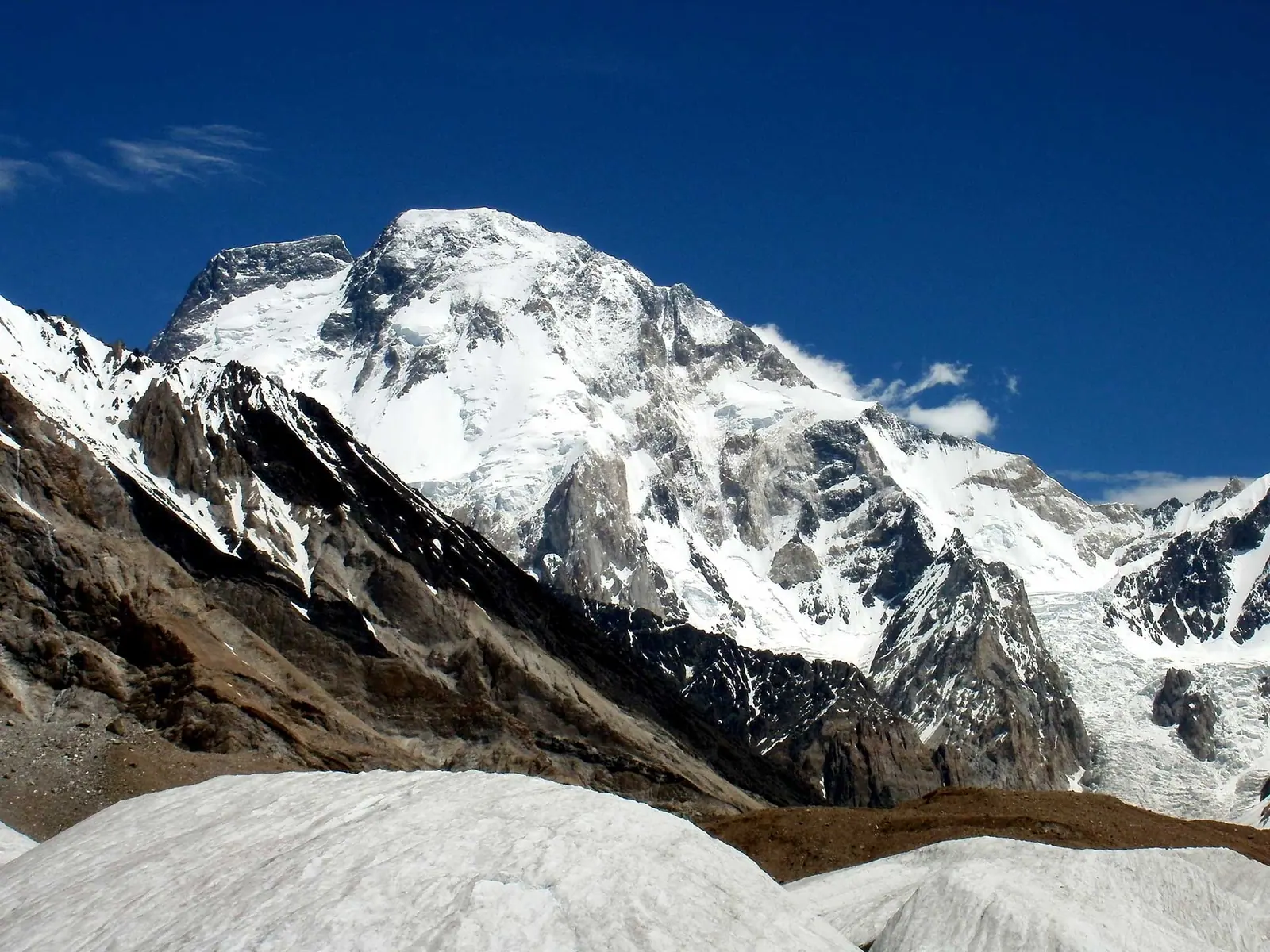
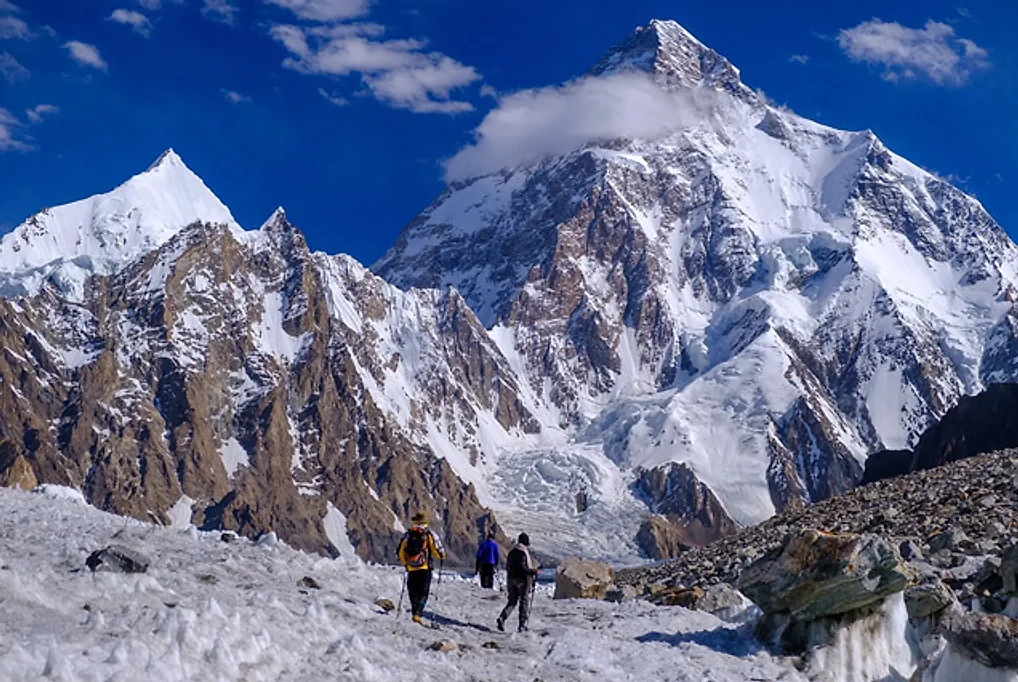
The K2 and Broad Peak season is a short summer window, roughly June to August, in which expedition teams walk in to Concordia, build a camp system on the mountain and wait for a spell of settled weather long enough to attempt the summit. Most of the work is patience, acclimatisation and logistics. This guide explains how that season runs, in general terms, so you can read any year's news with context.
It is deliberately an explainer, not a results report. We do not summarise any particular year's summit counts, names or incidents here, because those belong in current, properly sourced reporting. For the peaks themselves, start with our overview of the [five 8000-metre peaks of Pakistan](/blog/the-8000m-peaks-of-pakistan).
When is the K2 and Broad Peak season?
The main Karakoram season for K2 and Broad Peak runs through the summer, broadly June to August. Teams usually arrive in Skardu in June, trek in to base camp over about a week, and hope for a summit window in July or early August. Exact timing shifts from year to year with snow and weather.
The window is narrow because the Karakoram has little in the way of a long, stable climbing season. Earlier in the year, deep snow, cold and storms dominate. Later, the monsoon-influenced pattern and the approach of autumn bring more unsettled conditions at altitude. Summer sits between the two, which is why almost every expedition to these peaks is scheduled into it.
Because the window is short, the whole trip is built backwards from it. The walk-in, the acclimatisation rotations and the rest days all have to fit before the best weather arrives, and there is little slack if something goes wrong early. That is why a realistic expedition length is measured in weeks, not days, and why we plan buffer time into the schedule of our [K2 expedition](/tours/k2-expedition) and [Broad Peak expedition](/tours/broad-peak-expedition).
| Item | What happens |
|---|---|
| Window | Roughly June to August, with summit attempts usually in July or early August |
| Base camps | Trek in from Askole to Concordia; K2 and Broad Peak camps sit on and beside the Baltoro Glacier |
| Summit pushes | Rotations to higher camps to acclimatise, then a short push when the forecast allows |
| Weather | Decides everything; settled spells are brief and uncertain |
| Who climbs | Commercial teams, independent teams, and local high-altitude staff supporting many of them |
How a summit push works
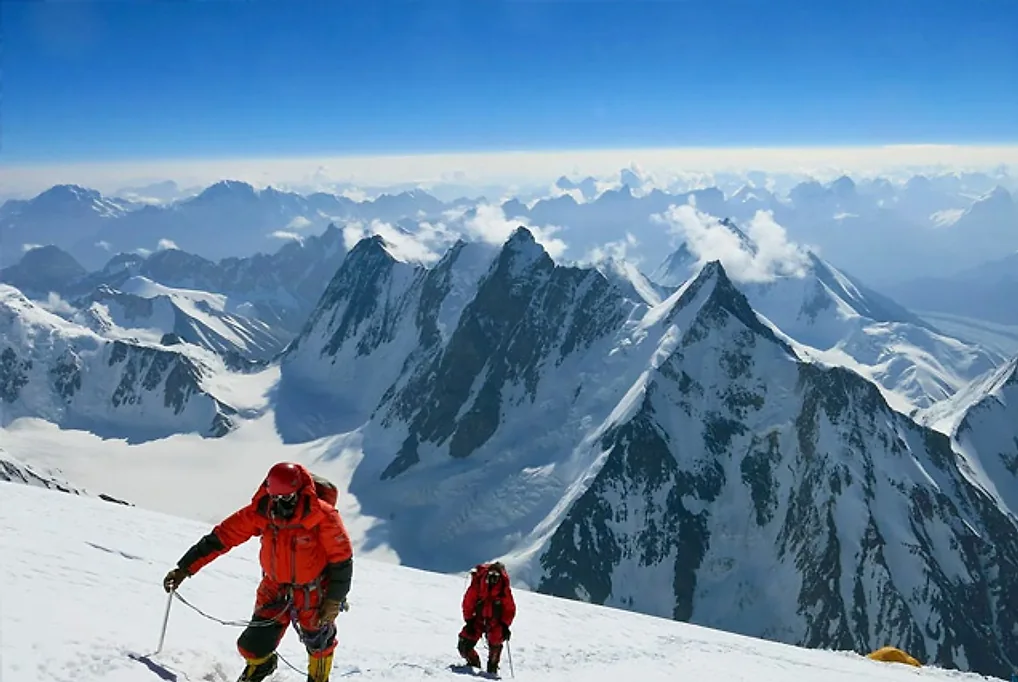
A summit push is the final, short ascent from the highest camps, launched only when the forecast shows a long enough spell of stable weather. Before it comes weeks of preparation: walking in, settling at base camp, and making acclimatisation rotations up the mountain and back down to rest. The push itself is a small part of the whole trip.
Once teams reach Concordia and their own base camps on the glacier, life becomes a routine of rest, eating, checking forecasts and moving gear up the mountain. Acclimatisation rotations take climbers to higher camps to sleep, then back to base to recover. Done properly, this builds the red blood cell and breathing adaptation the body needs above 7,000 metres. Our guide to [altitude and acclimatisation in the Karakoram](/blog/altitude-acclimatisation-karakoram) explains the physiology.
Routes on both mountains are typically prepared with fixed ropes early in the season, often a shared effort among the teams present, with local high-altitude staff doing a large share of the carrying and rope fixing. Ropes are a tool for safer movement on steep or icy ground; they do not make the mountain safe. Conditions change, anchors need checking, and on a crowded day everyone moves at the speed of the slowest section.
When a window opens, teams move up through the camps, and the summit day usually starts in the dark hours of the night. The decision to continue or turn back is made repeatedly, by climbers and guides, based on weather, time, and how the team is feeling. Turning back is a normal and often wise outcome, not a failure.
Why the weather dictates everything
Weather dictates everything because the summit is only reachable in a calm, cold, low-wind spell, and those spells in the Karakoram are brief and hard to forecast. Teams spend most of the season waiting. Wind, new snow, cloud and avalanche risk can close the mountain for days, and then everyone wants the same short window.
Expeditions follow forecasts from professional weather services, and base camp managers share information among teams. Even so, forecasts at this scale carry real uncertainty. A window may arrive late, close early, or look good for the summit but poor for the descent. Experienced teams treat the descent as part of the plan, not an afterthought.
This is also why timing matters on arrival. A team that is already acclimatised and rested when a window opens can use it; one that is still on rotations may have to let it pass. It is also why no responsible operator can promise a summit. We can promise preparation, honest decision-making and a good team around you.
- Wind at altitude is often the deciding factor, more than temperature alone.
- Fresh snow adds avalanche risk and slows progress, sometimes for several days.
- Cloud and poor visibility make route-finding and descent harder.
- Waiting well, with food, rest and morale in order, is a real expedition skill.
Commercial and independent expeditions
Commercial expeditions are organised by a company that handles permits, logistics, camps, food, support staff and guiding, while independent teams organise more of this themselves. Both share the same mountain, ropes and weather windows. The difference is mainly how much support, planning and responsibility sits with the operator versus the climbers.
On a supported expedition, the operator arranges the Skardu logistics, permits and paperwork, the trek in, base camp kitchen and tents, communication, and often the climbing support. Climbers need to arrive fit, experienced and realistic. For permit basics, see our guide to [permits and paperwork in Pakistan](/blog/permits-and-paperwork-pakistan).
Independent or lightly supported teams may arrange fewer services and carry more of the decision-making themselves. Either way, the mountain does not distinguish between them. Everyone relies on the same shared route, and cooperation between teams, especially around rope fixing and rescue, is a normal part of the season.
As a rough guide, our supported expeditions start from $18,500 per person for K2 and from $18,000 per person for Broad Peak, with the price falling as group size grows. Those figures cover the Pakistan-side logistics and support described on each tour page. Our guide on [which 8000er to choose first, with costs](/blog/which-8000er-first-cost-and-first-peaks) explains how the two compare and where Broad Peak fits as a first step.
The human side: local high-altitude staff
Local high-altitude staff, often called high-altitude porters or HAPs, carry loads, fix ropes, set up camps and support climbers on the mountain. Many are from Balti villages near Skardu and the Baltoro approach. Their skill, experience and judgement are central to how nearly every Karakoram expedition runs, and their work carries a large share of the risk.
Alongside the high-altitude team are the cooks, base camp staff, guides, and the porters who carry equipment through the walk-in. We are a Skardu-based, Balti-run company, and these are our neighbours and colleagues. We care that they are properly equipped, fairly paid, insured as required and treated with respect. Our guide to [what porters carry](/blog/what-porters-carry) covers load limits and welfare on the approach.
When you read about any season, look for how local staff are described. Credit, safety equipment and fair treatment are good signs of a well-run team, and they are things you can and should ask any operator about before you book.
Following a season responsibly
To follow a season responsibly, rely on current, sourced reporting from established outlets and the operators and agencies involved, and treat early or social-media claims with caution. Facts about summits, conditions and incidents are often unclear at first. Respect for those affected matters, particularly when a death or rescue is involved.
Climbing at this altitude carries serious and real risk, including loss of life. Every year brings its own mix of conditions, outcomes and difficult moments, and we do not generalise from one year to the next. For results in any given season, consult current reporting and the teams themselves rather than summary claims, including ours.
If you are weighing whether an expedition is right for you, set realistic expectations. A summit is never guaranteed, even on a well-run trip with good weather. Strong preparation, honest self-assessment, solid acclimatisation and a willingness to turn around are the best predictors of a good experience. Building up through trekking and lower peaks first is a sensible path; our guide to [planning your first trek in Pakistan](/blog/planning-your-first-trek-in-pakistan) is a good place to start, and [fitness and training for a Karakoram trek](/blog/fitness-and-training-for-a-karakoram-trek) covers preparation.
Plan this with us
If you are considering a Karakoram summer season, talk to us early. We run every trip from Skardu under Department of Tourist Services licence No. 008, with no middlemen, and we will give you an honest view of whether K2, Broad Peak or a stepping-stone objective suits your experience and goals.