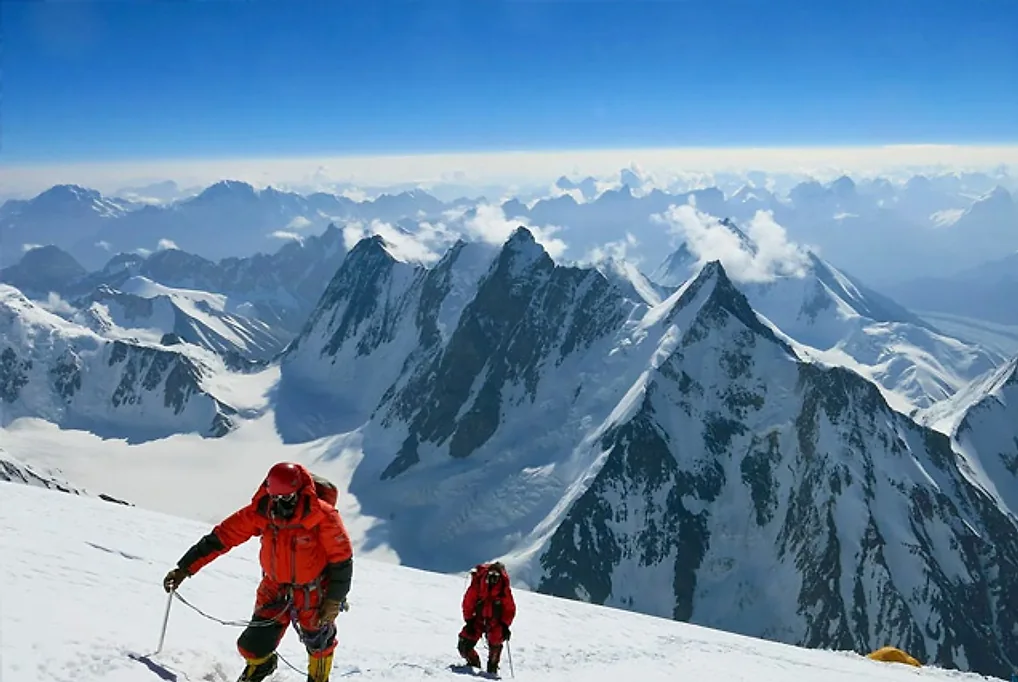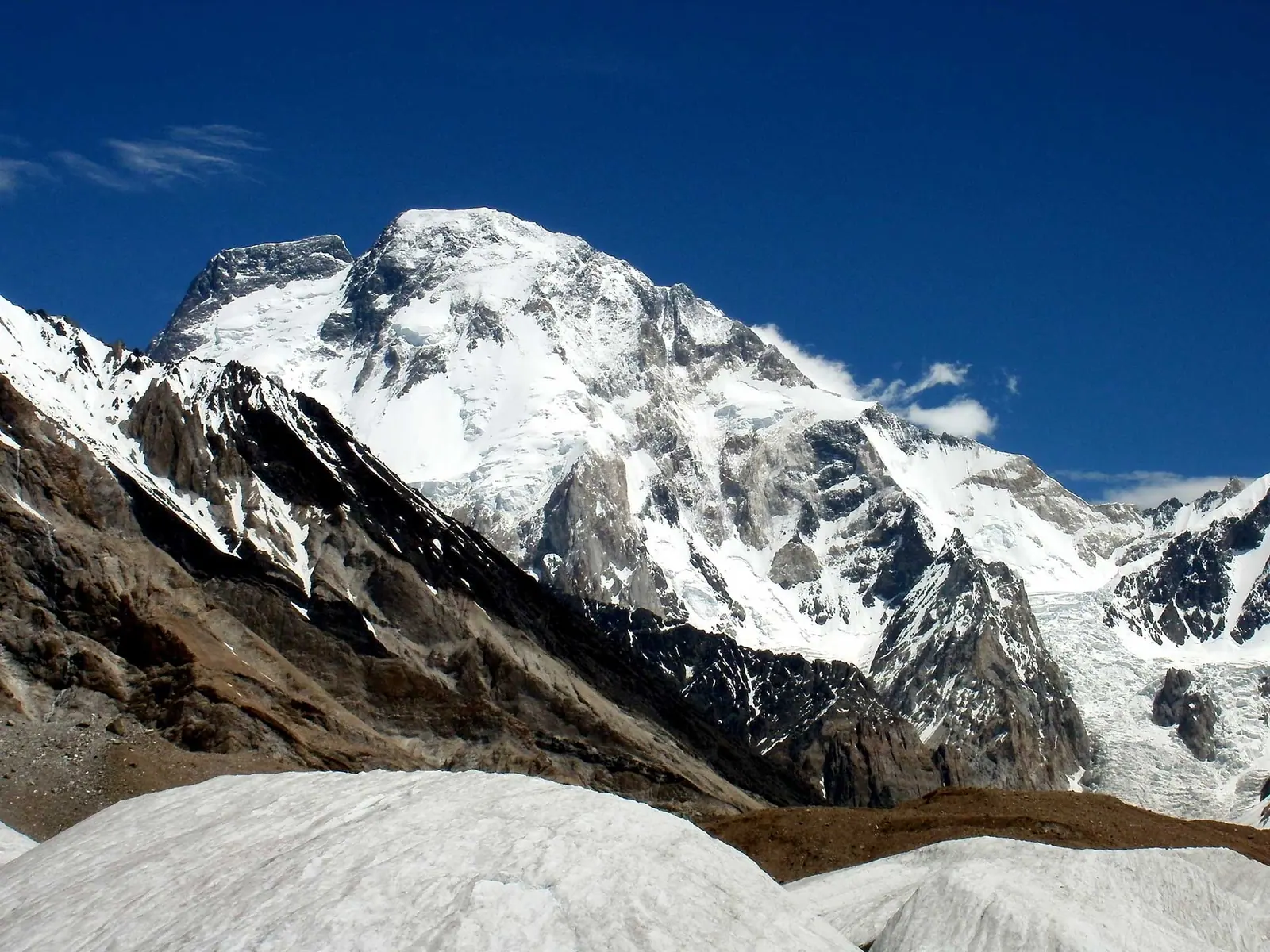
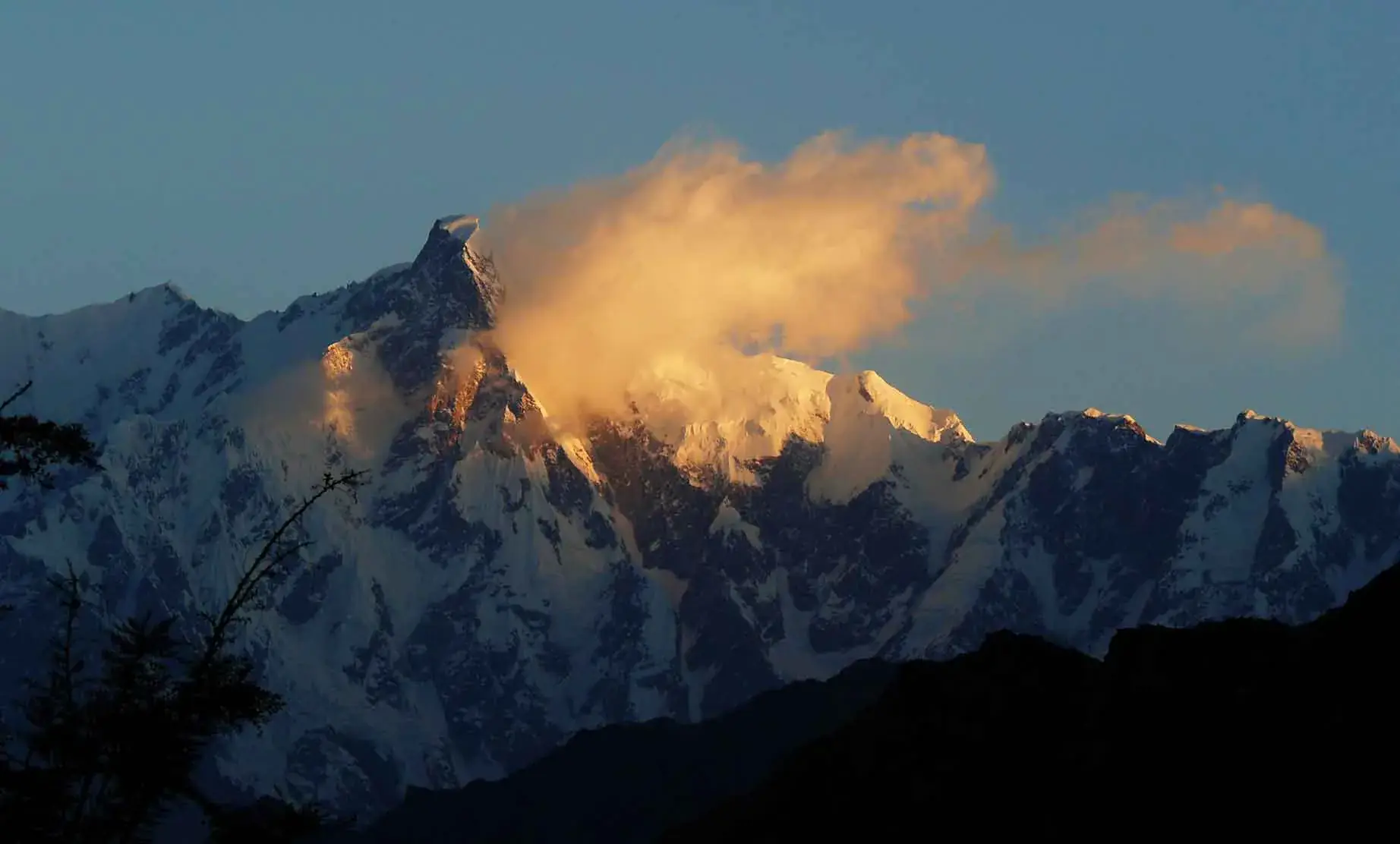
Pakistan has five of the world’s fourteen peaks over 8,000m. Four of them — K2, Broad Peak and both Gasherbrums — ring the head of the Baltoro around Concordia; the fifth, Nanga Parbat, stands alone to the west in the Himalaya. We run full-service expeditions on all five with native high-altitude staff.
K2 — 8,611m, the hardest of them all
The second-highest mountain on earth and, by reputation, the most serious of the eight-thousanders: steeper, colder and less forgiving than Everest, with no easy side. It rises at the head of the Baltoro, and for most climbers the journey begins with the same walk to Concordia that trekkers make.
Nanga Parbat — 8,126m, the Killer Mountain
The ninth-highest in the world and the western anchor of the Himalaya, rising alone above the Indus. Its Rupal Face is the largest mountain wall on earth. It earned its grim nickname early in climbing history and remains a committing objective, approached from the Fairy Meadows, Rupal or Diamir sides.
Gasherbrum I (Hidden Peak) — 8,080m
The eleventh-highest, set so deep in the Gasherbrum massif at the head of the Baltoro that it is hidden from most of the approach — hence the name. A classic, remote Karakoram expedition.
Broad Peak — 8,051m
The twelfth-highest, a broad-shouldered giant standing right beside K2. It is often chosen as a first eight-thousander or as acclimatisation for K2 — though "easier" is relative up here, and its long summit ridge catches many climbers out short of the true top.
Gasherbrum II — 8,035m
The thirteenth-highest, and widely regarded as the most achievable of Pakistan’s eight-thousanders for a well-prepared climber — which is exactly why it is such a popular first 8,000m objective.
Four peaks, one basin
K2, Broad Peak and both Gasherbrums cluster around Concordia at the head of the Baltoro — one of the few places on earth where four eight-thousanders stand together. It is why the walk to Concordia is a world-class trek in its own right, and why we stage so much of our expedition logistics through it.
What climbing one with us involves
Permits, royalties and a government liaison officer; a full base camp with heated mess and kitchen; native high-altitude porters and guides who have worked these mountains for years; fixed rope and supplementary oxygen where the objective calls for it; and the conservative acclimatisation and weather-window judgement that getting home safely depends on. We require genuine prior high-altitude experience for any 8,000m peak, and we will ask about your climbing history before confirming.
Ready to talk about a season?
Tell us the peak and the year you have in mind, and we will send back a realistic plan — the right base-camp window, the staffing, and an honest view of what the objective asks of you — from a team that operates these mountains directly, with no middlemen.