Choose a Pakistan tour operator by checking six things before you pay a deposit: a verifiable government licence, who actually runs the trip on the ground, guide experience and group ratios, how porters are treated, whether the price is clear about what it includes, and what happens if someone falls ill. Most of these can be settled with a few direct questions, and the answers tell you more than any brochure.
How do you choose a good Pakistan tour operator?
A good Pakistan tour operator holds a current Department of Tourist Services licence, is run by people who actually live in the mountains, publishes what its price includes, caps loads and pays porters fairly, and has a written plan for altitude, communications and evacuation. If an operator cannot answer these questions plainly, keep looking.
Pakistan's mountain regions are remote, and a trek here depends on people you may only meet once you arrive. That is why it pays to ask questions early, in writing, and to compare answers between operators rather than prices alone. The table below is the checklist we would use ourselves if we were booking from abroad.
| Check | What to ask | Green flag |
|---|---|---|
| Licence/registration | What is your DTS licence number? | A number you can verify with the department |
| Local ownership | Who runs my trip on the ground? | Named local team, no hidden subcontractor |
| Guide ratios | How many clients per guide? | Ratio stated in writing, trained lead guide |
| Porter welfare | What are load limits, pay and insurance? | Clear answers, proper kit supplied |
| Pricing transparency | What is included and excluded? | Itemised quote, price falls with group size |
| Safety & evacuation | What is the plan if someone is unwell? | Acclimatisation, comms and evacuation explained |
Check the licence and who actually runs the trip
Ask for the operator's Department of Tourist Services licence number and confirm it with the department. Then ask who will actually run your trip: the company you pay, or a local team it subcontracts. Resellers are not always bad, but you should know who is responsible when something goes wrong on the trail.
Licensing matters because it ties an operator to rules on guides, safety and conduct, and gives you somewhere to turn if a dispute arises. A licence number on a website is a starting point, not proof. Ask for it by email and check it independently.
Ownership matters for a different reason. Many trips sold overseas are resold several times before they reach a Pakistani operator, and each step takes a margin and adds distance between you and the people making decisions. When the delay is a landslide on the road or a change in weather, you want the person who decides to be the person who knows the valley.
- Ask whether the company you are paying owns the vehicles, employs the guides or contracts them, and where its office is.
- Ask for the name of the lead guide before you book, not after.
- Be wary of operators that cannot say where in Pakistan they are based.
Guides, ratios and experience
Ask how many clients each guide looks after, whether the lead guide has mountain or high-altitude training, and how many seasons they have worked your specific route. Small groups with an experienced lead are safer than large ones with a single guide. Get the ratio in writing rather than accepting a verbal answer.
Route knowledge counts as much as certificates. A guide who has walked the Baltoro many times knows where rockfall is likely, which campsites are sheltered and how the weather tends to turn. On a long trek there should also be a clear second person who can take over if the lead guide has to descend with a sick client.
Group size shapes the whole experience. Larger groups are cheaper per head, but they move at the pace of the slowest walker and put more pressure on camps and staff. Ask what the operator considers a comfortable maximum and whether it ever combines separate bookings into one group.
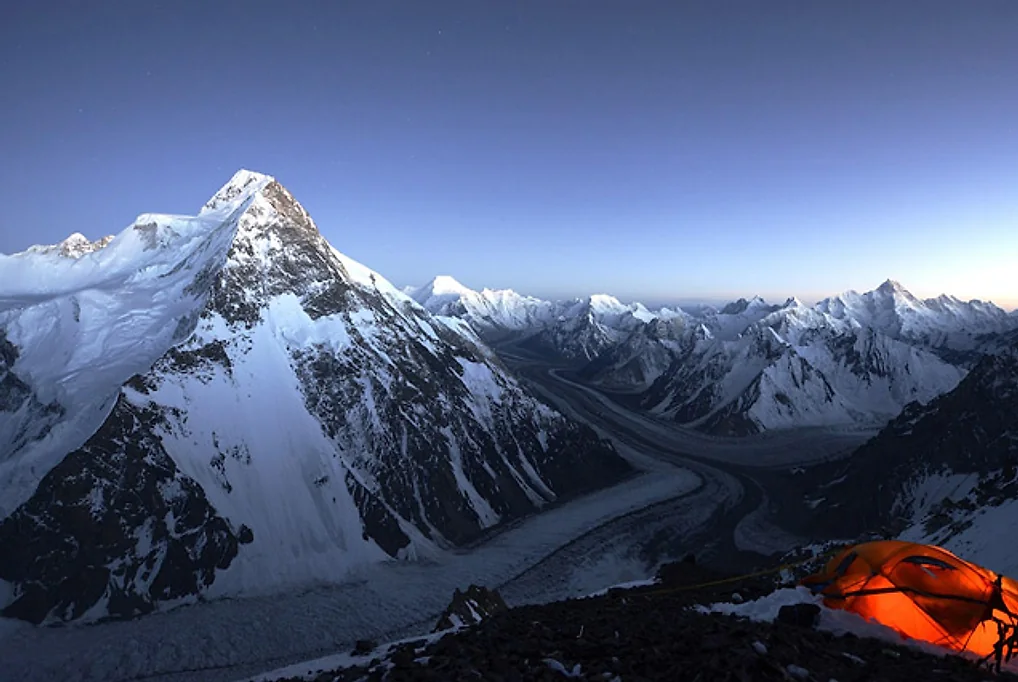
Our guides are local, and our lead guides know the routes they lead. Read the K2 Base Camp trek page for how we staff it, and the altitude guide for what a sensible itinerary looks like.
Porter welfare: the real test
Porters carry the loads that make a trek possible, so how an operator treats them tells you how it treats everyone else. Ask about load limits, daily pay, insurance, and whether porters get proper footwear, clothing and shelter at altitude. A vague answer is itself an answer.
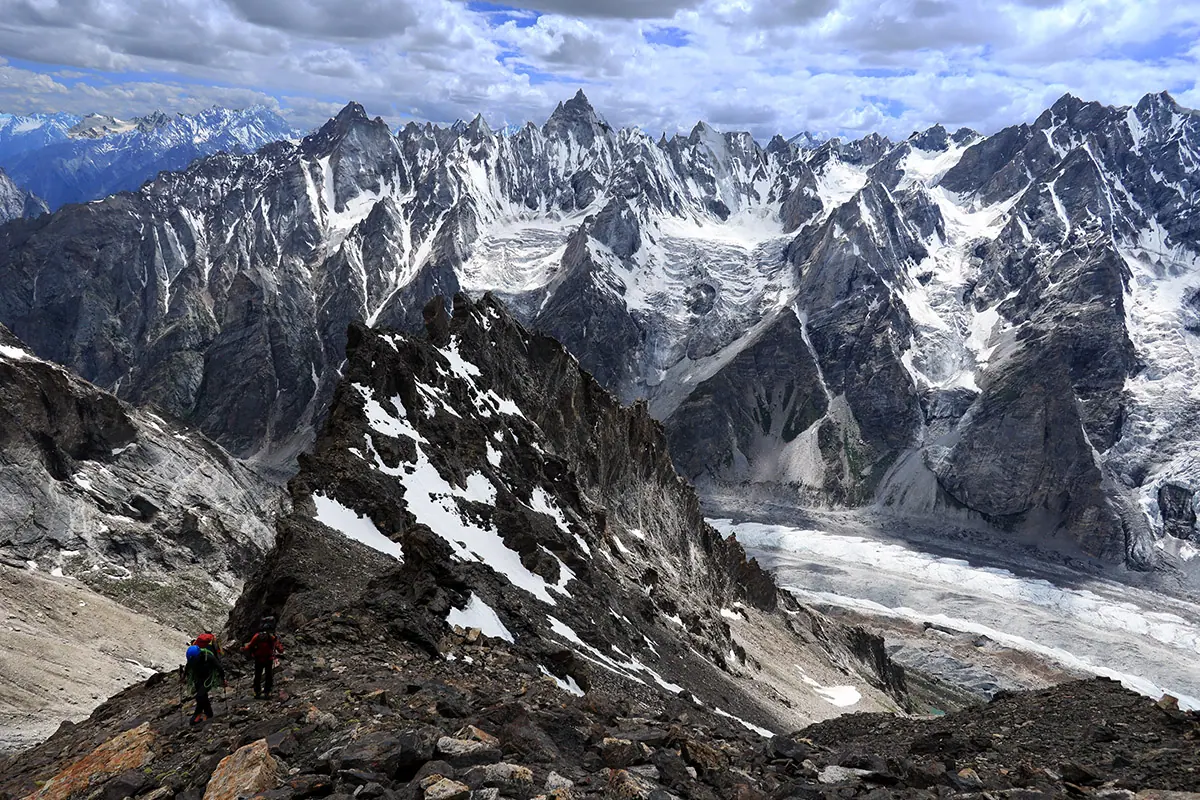
The Karakoram is hard on the people who work in it. Porters cross glaciers and rocky ground, often in cold and wet conditions, carrying weight for days. Responsible operators set a sensible limit on what each porter carries, supply the equipment needed for the conditions, make sure injuries and illness are looked after, and pay on time and in full.
You can test this before you book. Ask what a porter's load is limited to and how that is enforced. Ask whether porters are insured. Ask what happens if a porter becomes ill or injured high on the route. An operator that treats this as routine will answer without hesitation. One that changes the subject is telling you something.
It is also fair to ask how your own luggage affects this. Travellers who pack heavy bring extra loads that someone else carries. We explain what porters actually carry, and how to pack with them in mind, in a separate guide.
Transparent pricing and what's included
A trustworthy quote lists what is included and excluded, and the price should fall as the group grows because fixed costs are shared. Be cautious of prices far below the rest of the market: the savings usually come from underpaid porters, thin safety margins or extras added later.
Compare quotes line by line rather than by the headline number. Check whether permits and paperwork, guides, porters, cooks, camping equipment, transport, meals and accommodation are all covered, and what is left to you: flights, visas, travel insurance, tips and personal gear are common exclusions. A low price with a long list of extras can end up higher than an honest all-in quote.
Tiered pricing is a good sign. The cost of a guide, a cook and a vehicle is split across the group, so a larger party genuinely pays less per person. If an operator quotes the same price for two people and for ten, ask why.
For reference, our K2 Base Camp trek starts from $2,300 per person and our Hunza and Skardu Highlights tour from $1,650 per person, at the top end of the group-size tiers, with the price falling for larger groups. For a broader look at what drives costs, see our cost guide.
Safety systems: acclimatisation, communications, evacuation
Ask how the itinerary builds in acclimatisation days, what communication the guides carry in areas without mobile signal, and what the evacuation plan is if someone becomes seriously ill. Good operators can describe this step by step, and they will tell you when the plan means turning around.
No operator can remove risk from high-altitude travel, and you should distrust anyone who claims to. What a good operator can do is reduce it with a realistic pace, rest days where they are needed, guides who watch for early symptoms, and a clear decision-making process for when a client must descend.
Also ask about weather and road delays. Flights to Skardu are weather dependent, and the Karakoram Highway can close after landslides, so a sound itinerary has some slack in it. An operator that talks about contingency openly is usually one that has dealt with it before.
Finally, check your own side of the arrangement. Most operators will expect you to carry travel insurance that covers trekking at altitude and evacuation, so read the policy rather than assuming it does.
How we work
Sky Adventures is based in Skardu and run by Balti people who live here, with no middlemen between you and the team on the ground. We hold Department of Tourist Services licence No. 008, publish tiered prices that fall with group size, and follow fair porter practice on every trek.
In practice, that means the people answering your questions are the people who will organise your trip. We tell you what is included and what is not, we explain how price changes with group size, and we are open about the conditions you are likely to face, including when a route or date is a poor choice. We would rather lose a booking than sell a trip that does not suit you.
We do not ask you to take any of this on trust. Ask us the same questions in the table above, and compare the answers with those of any other operator you are considering. That is how you should choose, whoever you end up travelling with.
Plan this with us. If you are weighing up a trek or tour, tell us your dates, group size and experience, and we will reply with a clear plan and an itemised quote.