If you want the world's most famous base-camp trek with lodges, villages and a well-worn path, Everest Base Camp in Nepal is the natural choice. If you want something wilder, quieter and more committed, K2 Base Camp in Pakistan is a different kind of journey: a fully camped walk up the Baltoro glacier to Concordia and on to the foot of the second-highest mountain on earth. Neither is better in absolute terms. They suit different trekkers, and this guide sets them side by side honestly.
K2 Base Camp vs Everest Base Camp — the short answer
K2 Base Camp is the more remote, more demanding and far quieter trek; Everest Base Camp is the more accessible, better-supported and busier one. Choose Everest for teahouse comfort and a shorter, well-trodden route. Choose K2 for a fully camped glacier journey to Concordia, where four of the world's 8,000-metre peaks stand together.
We run the K2 side of this comparison from Skardu, so we know it first-hand. We have tried to be fair to Everest, which is a superb trek in its own right and the better first high-altitude experience for many people. The table below gives the headline differences before we go into each in turn.
| K2 Base Camp | Everest Base Camp | |
|---|---|---|
| Location | Baltistan, Pakistan (Karakoram) | Khumbu, Nepal (Himalaya) |
| Max altitude | About 5,000 m at K2 Base Camp; 5,585 m on the Gondogoro La option | About 5,364 m at Base Camp; Kala Patthar a little higher |
| Typical length | Roughly two to three weeks door to door | Roughly two weeks from Lukla, itinerary dependent |
| Accommodation | Tents and camp crew throughout | Teahouses and lodges |
| Crowds | Very few trekkers, even in peak season | Busy trail in spring and autumn |
| Difficulty / remoteness | Demanding, glacier terrain, no villages beyond Askole | Moderate to demanding, villages and services en route |
| Permits | Special-region permits arranged by your operator | National park and local permits, arranged locally |
| Best season | Roughly June to August | Spring and autumn windows |
| Rough cost | From $2,300 per person with us (all-in, fixed price) | Varies widely by style; confirm current quotes |
How the trails differ
The Everest trail climbs through inhabited valleys, passing Sherpa villages, monasteries and lodges every few hours. The K2 route leaves the last village, Askole, and enters uninhabited terrain: river valleys, then the Baltoro glacier for days on end. You sleep in tents, eat from a camp kitchen and carry nothing but a daypack.
On the Everest trek, the day is shaped by where the next lodge is. You can walk light, buy a hot drink at most stops and adjust your pace to the weather. The ground is mostly a dirt and stone path, with suspension bridges and steady climbs, and the mountain itself stays hidden for much of the walk.
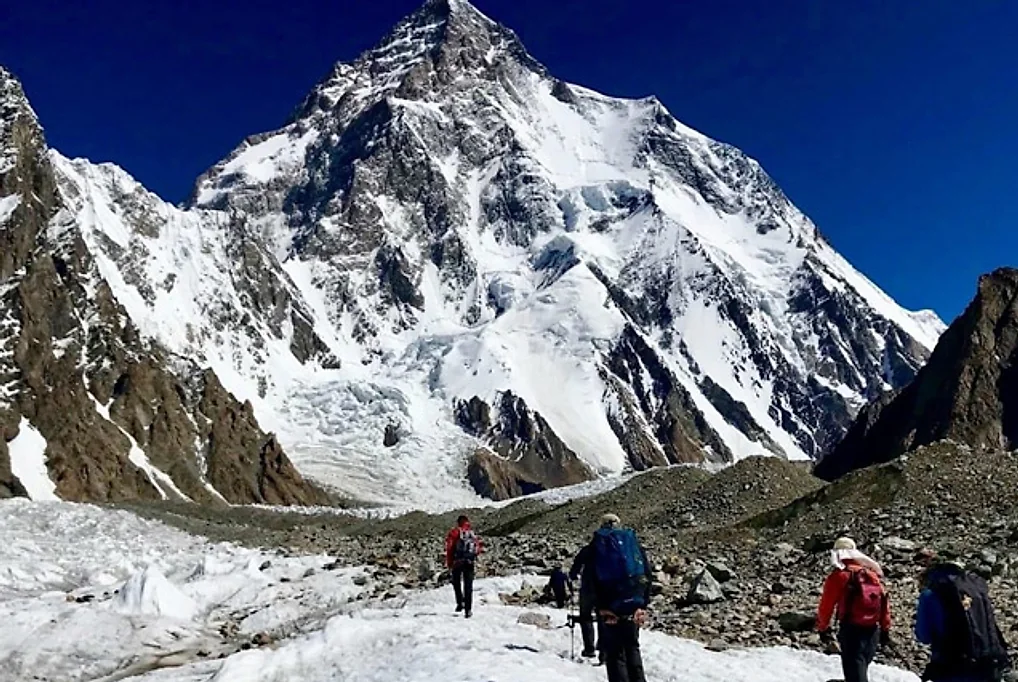
On the K2 trek, the day is shaped by the camp. The team moves ahead, the cook crew sets up, and you walk into a ready-made camp each afternoon. The terrain is rubble, moraine and ice, which is slower and harder on the legs than the path numbers suggest. The reward is that the great peaks are in view for days: Masherbrum, the Trango Towers, Paiju, then Concordia.
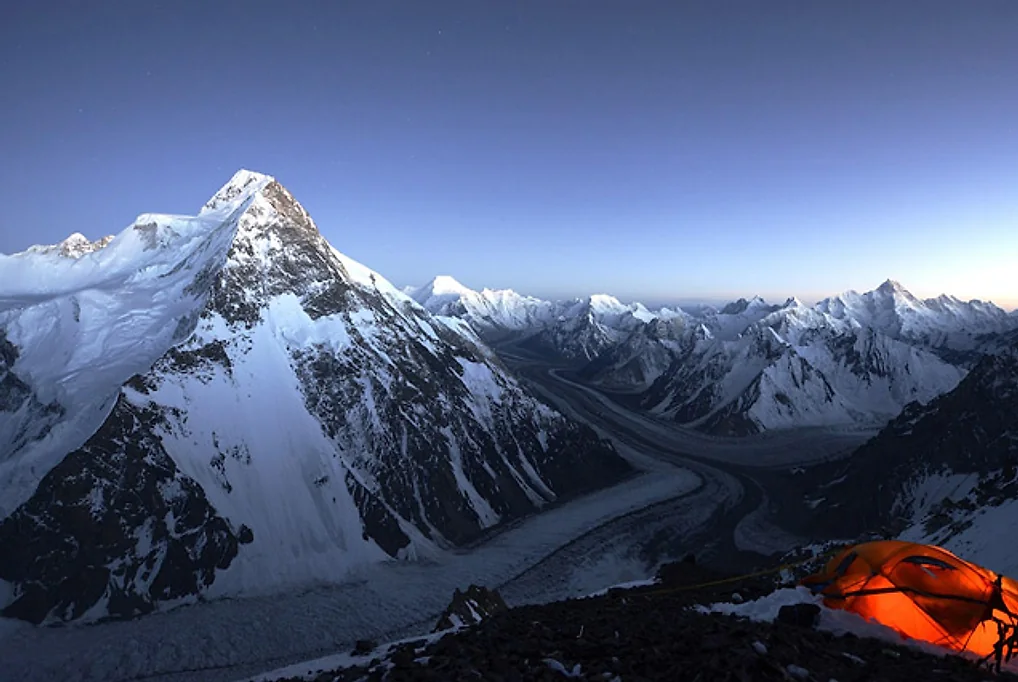
Concordia is the heart of the K2 trek. At roughly 4,600 m, the Baltoro meets the Godwin-Austen glacier, and K2, Broad Peak and both Gasherbrums rise around you in a single amphitheatre. Everest Base Camp, by contrast, is a rocky camp beneath the Khumbu Icefall, and Everest itself is not visible from it. The best Everest views come from Kala Patthar and the higher viewpoints.
Difficulty and remoteness
Both treks demand fitness and altitude respect, but K2 is harder in a different way. It has no lodges, no roads after Askole and no quick exit, so the support you start with is the support you have. Everest has villages, clinics and helicopter access closer to hand. Remoteness is the main difference, more than altitude.
Altitude is comparable: both treks reach roughly 5,000 m, and K2 is not the higher walk. What differs is the length of time spent far from help and the nature of the ground. Glacier travel is tiring, crevasse and rockfall awareness matters, and weather can delay days. Our guides handle route-finding, river and glacier judgement and the daily decision of whether to push on.
If you have never trekked at altitude, Everest is the gentler introduction, and we say so plainly. If you have done multi-day treks before and are comfortable with long days on rough ground, K2 is well within reach with proper preparation. Our guides on fitness and acclimatisation cover both.
Crowds and scenery
Everest Base Camp is one of the busiest trekking trails in the world in its spring and autumn windows, with a steady stream of walkers and some queues on bridges and at lodges. K2 Base Camp sees only a small fraction of that traffic. For much of the Baltoro you may meet only a handful of other groups.
Scenery is where the comparison becomes personal. Everest delivers high ridgelines, prayer flags, Sherpa culture and the long-awaited sight of the highest mountain on earth. K2 delivers raw scale: granite towers, ice walls and a river of ice you walk on for days, framed by 8,000 m giants. Everest feels cultural and lived in; K2 feels elemental.
Culture is part of both stories. On the K2 route you start in Skardu and pass through Balti villages, and many of the people who make the trek work, from porters to cooks, are from Baltistan. On Everest, Sherpa and Khumbu communities play the same role. The porter side of our trips is covered in our guide to what porters carry.
Cost and permits
Our K2 Base Camp trek starts from $2,300 per person, and the Gondogoro La variant from $2,650, with the price falling as the group grows. That covers the camp-based logistics. We cannot quote Everest costs on your behalf, because they vary a great deal with style, season and lodge level, so compare current quotes.
Permits are another practical difference. The K2 region is a restricted, special-permit area, and we arrange the paperwork and the required routing for you, so allow lead time and send your passport details early. Nepal requires its own national park and local permits, which operators and lodges there arrange. Fees change, so confirm current figures with the issuing authority or your operator.
When comparing prices, check what is included. A camped trek bundles the cook, tents, meals, porters and permits into one fixed price, whereas a teahouse trek often has you paying for rooms, food and drinks along the way. For the full breakdown of our figures, see our K2 cost guide, and for general costs see our overview of trekking costs in Pakistan.
Which should you choose?
Choose Everest Base Camp if you want lodge comfort, a shorter and well-supported route, and a first big-altitude trek. Choose K2 Base Camp if you want solitude, a glacier journey, Concordia and a fully supported expedition-style trek. If you want more, the Gondogoro La variant adds a high pass.
- Choose Everest if this is your first trek above 4,000 m and you want villages, lodges and services close by.
- Choose K2 if you are comfortable camping for two to three weeks and want few other trekkers around you.
- Choose K2 with the Gondogoro La if you have trekking experience and want a pass crossing at 5,585 m.
- Do both eventually: many trekkers use Everest as a first step and return for the Karakoram.
The Gondogoro La variant extends the standard route over a high pass, descending to Hushe, and suits trekkers with prior experience. Our separate guide compares the two K2 options in detail.
Season and timing
The seasons do not overlap. The Karakoram trekking window is the summer, roughly June to August, when the glacier is passable and the weather is most settled. Everest's best windows fall in spring and autumn. If you can only travel in one part of the year, that may decide the question for you.
Neither season is risk-free. Weather can change quickly on both, and delays are part of high-mountain travel. Build spare days into your plans and check our season overview before you book flights.
Plan this with us
If K2 is the one that is calling you, we can talk through the route, the dates and the fitness you need. We run every trip ourselves from Skardu, hold Department of Tourist Services licence No. 008, and give you a fixed price up front. Tell us your experience and the months you can travel, and we will recommend the right option honestly.